

 Tweet
Tweet
Is that you Judge Diarmuid O'Scannlain?
The 9th Circuit Says the Right To Bear Arms Does Not Extend Beyond Your Doorstep
(emphasis added)
The link in the quote takes you to p. 128, the beginning of the dissent.
Justice Thomas ("bedroom to the kitchen") and Judge O'Scannlain aside, I'm curious how the anti-civil rights forces in the courts and even those on "our side" feel they can 'get away with' compartmentalizing the right as...
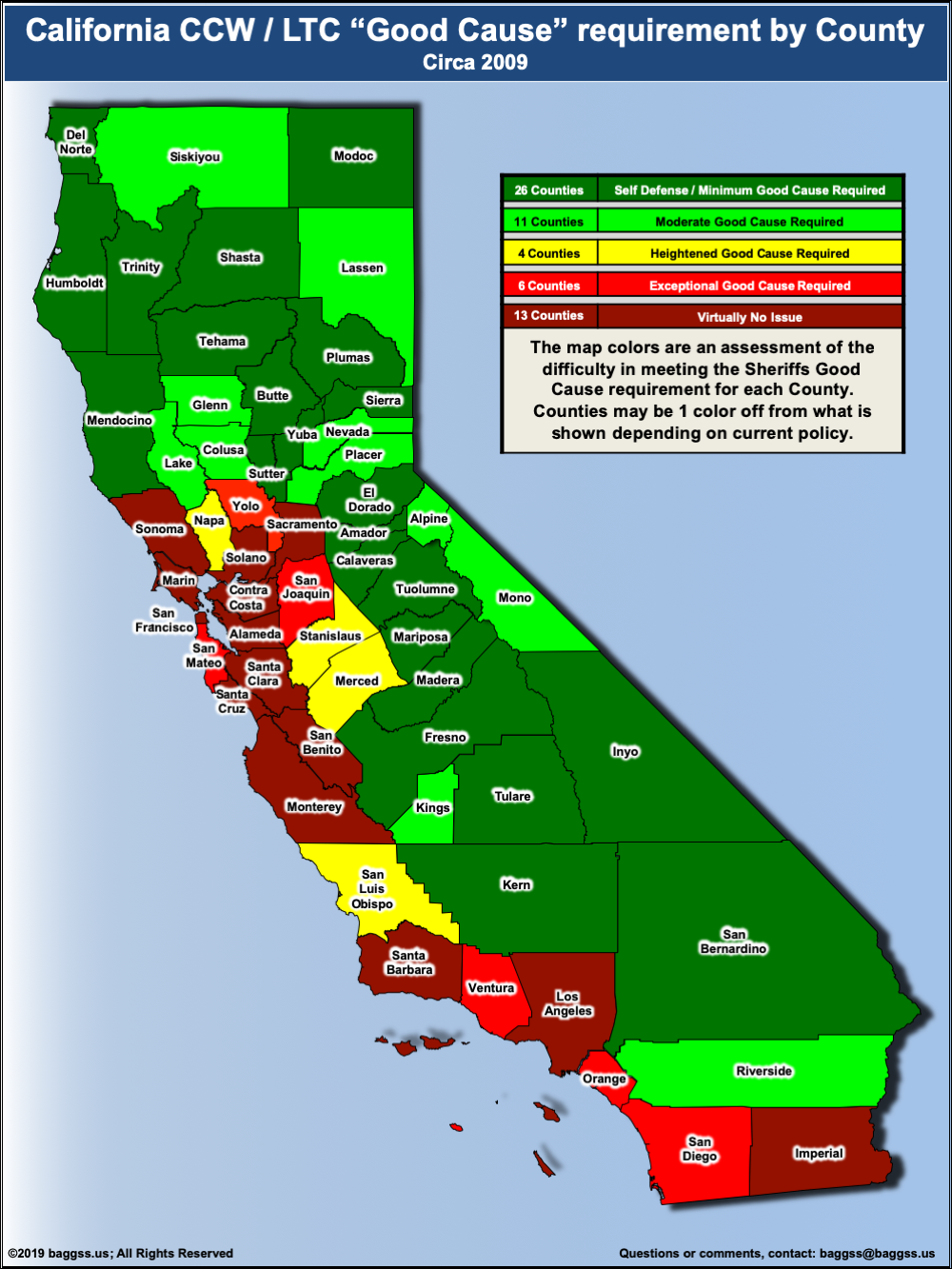
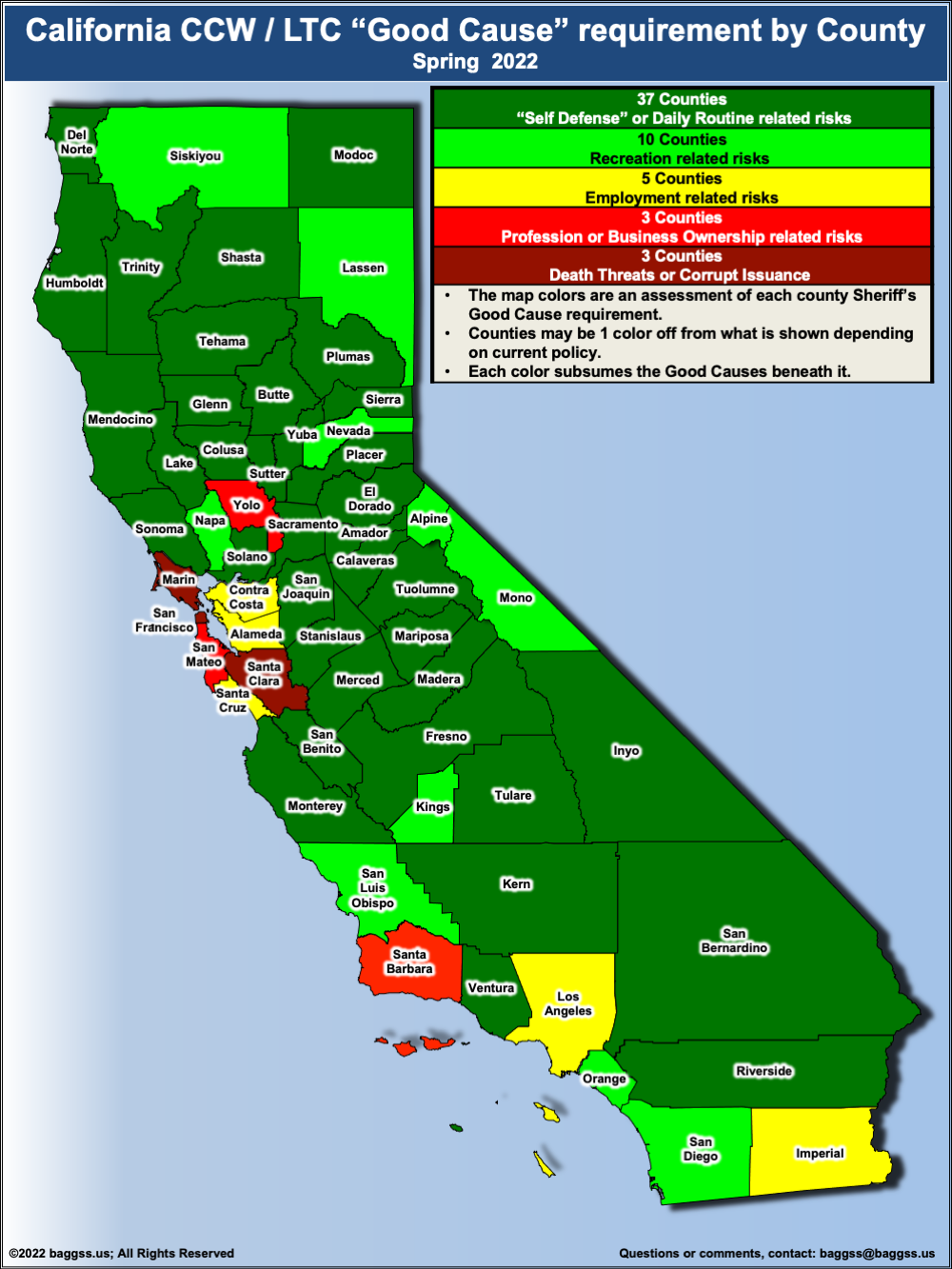
This is especially true given that, in many cases, as we see in Hawaii and some counties in California, the right to "bear" (in any form) is, in essence, not allowed to the vast majority; i.e., simply because a few are allowed doesn't mean that the right for the majority has not been infringed. While those on the Left (and even some on "our side") prefer to emphasize this passage from Heller...
...the reality is that they all fail to acknowledge the context provided for that passage in pages of documentation in the decision. For those who claim that the majority only supported open carry as "the" right because the cases the majority cited involve denial of "concealed carry" need to actually READ the entirety of Heller (as opposed to relying on someone else's interpretation in support of a particular agenda) and place it within the context of 'explanation' Scalia very publicly provided after release of the decision. As an example...
In other words, 'at issue' vis a vis the cited case wasn't "concealed carry can be banned," it was whether "to keep and bear" was connected to militia service. The portion I placed emphasis on might also be noted in that the 'right being recognized' wasn't "open vs. concealed carry," but the limitation on use; i.e., if the topic of the paragraph was "militia service" and the majority opinion in Heller holds that the right to "keep and bear" is unconnected to militia service, then the limitation insofar as "use" cannot be solely that of "military purpose."
My broader point is that we should not be hung up on "concealed vs. open" as THE right and we shouldn't allow it to be compartmentalized in that manner for or in the courts. The issue is whether "to bear" applies outside the home. The manner of "bearing," in this day and age, is going to be 'limited' for a variety of practical reasons. However, the rationale behind such 'limitations' must be based on the context of the situation and, I firmly believe, that's what Scalia's language is indicating with... "concealed weapons prohibitions have been upheld under the Amendment or state analogues... laws forbidding the carrying of firearms in sensitive places such as schools and government buildings."
Remember, Scalia was trying to keep Kennedy on board by incorporating 'compromises' which Kennedy was insisting upon. To accomplish that without creating an 'absolute' precedent, he carefully 'couched' (or caveated) the language. The idea was to set the precedent of an "individual right." Scalia was very public about limitations, whatever those might turn out to be, as "to be determined" in future cases. As a result, I would be very dubious over (and even more cautious asserting) claims that the majority opinion in Heller espoused, delimited, or portrayed anything "absolutely" beyond the opening line of what was held in Heller...
This seems to be precisely what Justice Thomas and Judge O'Scannlain are getting at; i.e., that the words "such as" in that line were NOT a 'limitation,' but denote an exemplar from a cornucopia of "lawful purposes" and, thus, by derivation, "lawful means" in pursuit of such "lawful purposes." Any other interpretation which presupposes or infers "strict limitations" placed on the right in the Heller decision is what Justice Thomas has referred to (with Scalia himself signing on) as a "crabbed reading of Heller"...
Such is consistent with one of my favorite quotes from SCOTUS and one I often repeat as an 'ideal' to be striven toward as an underlying premise by the Judiciary when addressing fundamental rights (especially specifically enumerated ones)...
The reason? Because, the Preamble to the Bill of Rights stipulates...
Thus, as was stated earlier...
Or... More accurately as regards the manner of "to bear" and any limitations on use... We need SCOTUS to declare that "bear" includes, but is not limited to, "carry for self defense in public places."

The 9th Circuit Says the Right To Bear Arms Does Not Extend Beyond Your Doorstep
"The Second Amendment to the United States Constitution guarantees 'the right of the people to keep and bear Arms,'" Judge Diarmuid O'Scannlain writes in a blistering dissent joined by Judges Consuelo Callahan, Sandra Ikuta, and Ryan Nelson. "Today, a majority of our court has decided that the Second Amendment does not mean what it says.
The link in the quote takes you to p. 128, the beginning of the dissent.
Justice Thomas ("bedroom to the kitchen") and Judge O'Scannlain aside, I'm curious how the anti-civil rights forces in the courts and even those on "our side" feel they can 'get away with' compartmentalizing the right as...
- concealed
- open
- concealed and open
- no concealed, if open
- no open, if concealed
- no concealed or open
This is especially true given that, in many cases, as we see in Hawaii and some counties in California, the right to "bear" (in any form) is, in essence, not allowed to the vast majority; i.e., simply because a few are allowed doesn't mean that the right for the majority has not been infringed. While those on the Left (and even some on "our side") prefer to emphasize this passage from Heller...
Miller
Aymette v. StateAymetteThe court then adopted a sort of middle position, whereby citizens were permitted to carry arms openly, unconnected with any service in a formal militia, but were given the right to use them only for the military purpose of banding together to oppose tyranny. This odd reading of the right is, to be sure, not the one we adopt
My broader point is that we should not be hung up on "concealed vs. open" as THE right and we shouldn't allow it to be compartmentalized in that manner for or in the courts. The issue is whether "to bear" applies outside the home. The manner of "bearing," in this day and age, is going to be 'limited' for a variety of practical reasons. However, the rationale behind such 'limitations' must be based on the context of the situation and, I firmly believe, that's what Scalia's language is indicating with... "concealed weapons prohibitions have been upheld under the Amendment or state analogues... laws forbidding the carrying of firearms in sensitive places such as schools and government buildings."
Remember, Scalia was trying to keep Kennedy on board by incorporating 'compromises' which Kennedy was insisting upon. To accomplish that without creating an 'absolute' precedent, he carefully 'couched' (or caveated) the language. The idea was to set the precedent of an "individual right." Scalia was very public about limitations, whatever those might turn out to be, as "to be determined" in future cases. As a result, I would be very dubious over (and even more cautious asserting) claims that the majority opinion in Heller espoused, delimited, or portrayed anything "absolutely" beyond the opening line of what was held in Heller...
The Second Amendment protects an individual right to possess a firearm unconnected with service in a militia, and to use that arm for traditionally lawful purposes, such as self-defense within the home.
Instead of adhering to our reasoning in Heller, the Seventh Circuit limited Heller to its facts, and read HellerId., at 412. But Heller repudiates that approach. We explained in HellerId.
The very purpose of a Bill of Rights was to withdraw certain subjects from the vicissitudes of political controversy, to place them beyond the reach of majorities and officials and to establish them as legal principles to be applied by the courts. One's right to life, liberty, and property, to free speech, a free press, freedom of worship and assembly, and other fundamental rights may not be submitted to vote; they depend on the outcome of no elections.
THE Conventions of a number of the States, having at the time of their adopting the Constitution, expressed a desire, in order to prevent misconstruction or abuse of its powers, that further declaratory and restrictive clauses should be added: And as extending the ground of public confidence in the Government, will best ensure the beneficent ends of its institution.
Or... More accurately as regards the manner of "to bear" and any limitations on use... We need SCOTUS to declare that "bear" includes, but is not limited to, "carry for self defense in public places."







Comment