Unconfigured Ad Widget

Collapse

Reloading Question! Help needed

Collapse
X
 
  • Time
  • Show
Clear All
new posts
  • #16
    Chaseb92
    Junior Member
    • Jul 2022
    • 79

    Originally posted by Sandspider500
    If you're using mixed brass, you probably used some cbc cases, then you used a lee fcd and swaged your bullet. Go shoot again but only shoot the loads where you used pmc, fc, Blazer, gfl, o Winchester. I bet your 1 out of 10 tumblers from the g19 will go away. I think it was luck you didn't fire any in the other pistols.
    I know for a fact I have some cbc brass. Initially I used the square deal b. I did notice when I pulled some they were small at around .345. I didn?t pull any from my last batch but I think that?s what I need to do. I didn?t think I needed to since I hardly turned the knob but maybe I still did too much. It?s just mind boggling that I want to blame the load yet have had zero problems with my other two guns.

    Comment

    • #17
      Chaseb92
      Junior Member
      • Jul 2022
      • 79

      Originally posted by jsanch03
      You have several things you need to do to narrow down what is causing the issue. Keyholing with lead or coated bullets generally has to do with obturation of the bullet as it travels down the bore of the barrel. Obturation is simply the base of the bullet creates a seal towards the base against the rifling as the gases push the bullet down the barrel. This seal also prevents leading as well. Bring out your calipers and measure the bullet prior to seating it. Most coated bullets including the bullets I cast and coat are sized to .356 diameter. I?ve shot thousands of my bullets through glocks, smith and Wesson, sig and my buddy?s beretta 92fs without leading or keyholing. Sometimes manufacturers of coated bullets have some lots of bullets that measure below .355 ( typical 9mm diameter). If the diameter of the bullet is smaller then the barrel it is not going to grab the rifling of the barrel which then destabilizes the bullet as it exits.

      If you?re not flaring the case enough it?s possible the bullet is getting swagged when you seat or crimp the bullet. Now, there?s an argument regarding the use of the Lee FCD and I?ll tell you that I use it without issue. Google search what an M die is (Lyman makes one) it not only flares but creates a little pocket a bit further down in the case then a normal flaring die. This allows for better seating and preventing any swagging.
      From what everyone is saying it sounds like I need to go pull some bullets and measure some new ones to compare what I?m doing during my seat and crimp stages to the diameter of my bullet. Just looked up the die?I do notice the flare only at the top so I didn?t really think about it but I wonder if I am literally squeezing it into the case before I even crimp because like I said the last batch was hardly any crimp at all.

      Comment

      • #18
        Chaseb92
        Junior Member
        • Jul 2022
        • 79

        Well hot dog!!

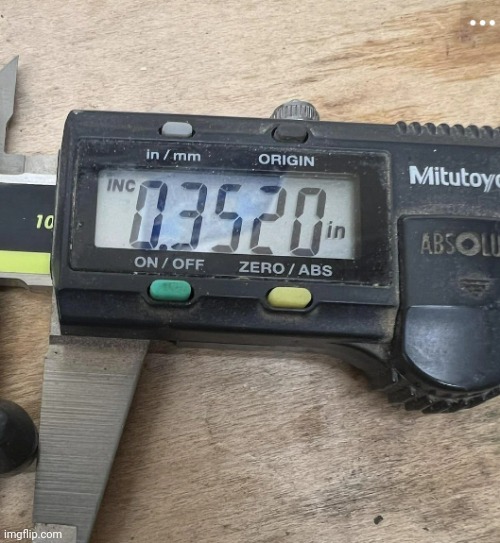
        Here’s what I got. I grabbed a handful and found three cbc. They’re on the left.


        New bullet measured .3555


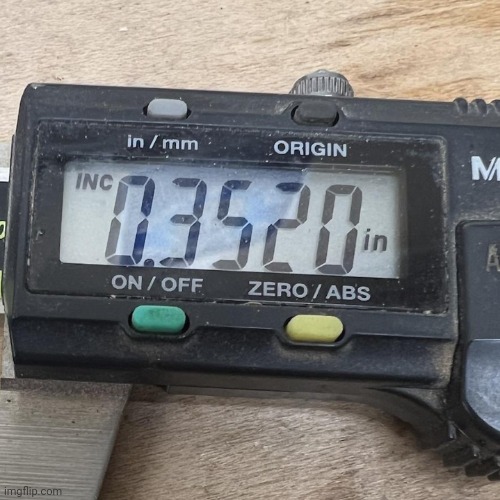
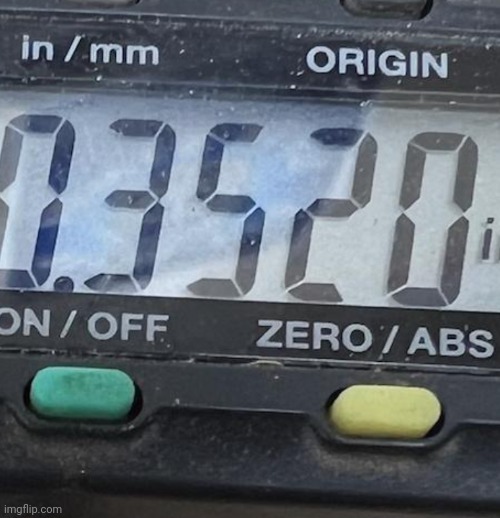
        Pulled bullet from cbc. Yikes.


        Picture of cbc pulled bullet


        Pulled bullet from pmc case measured .3555


        Case solved right?? From the info I’ve gotten and couple bullets I’ve pulled it seems like you guys are spot on. CBC brass got me?

        Comment

        • #19
          Sandspider500
          Senior Member
          • Apr 2018
          • 1140

          CBC strikes again.
          Originally posted by Palmaris
          You should not worry about me. This web site is monitored by all kind of authorities and if they found this kind of post credible enough as threat, they might want to start investigation. I have no idea what can be outcome. Just saying.

          Comment

          • #20
            Chaseb92
            Junior Member
            • Jul 2022
            • 79

            Originally posted by Sandspider500
            CBC strikes again.
            Thanks for the help! Appreciate everyone?s knowledge and input
            Last edited by Chaseb92; 02-23-2024, 5:48 PM. Reason: Typo

            Comment

            • #21
              croue
              Senior Member
              • Jan 2013
              • 1255

              Never heard of CBC. I guess I?ll watch out for them.


              Sent from my iPhone using Tapatalk

              Comment

              • #22
                Sailormilan2
                Veteran Member
                • Nov 2006
                • 3464

                Lead bullets should be sized at least .001" over bore size. You should slug the bore. Which means driving a lead bullet/slug/fishing weight down your bore, then measuring. Preferable with a mic, but a caliper will do. So, you need to start with something that measure at least .359". A 3/8" fishing weight will work.
                Are those bullets cast? Or are they swaged lead? Swaged lead is much softer than cast, and definatly needs to be size larger than the bore. Undersized bullets will strip out in the bore, and key hole. Generally soft lead can be scratched with a fingernail, or thumbnail.
                Most of the aftermarket American made 9mm barrels I have used slug at .356"+. So, that means going with at least a .357" bullet. The only ones that are close to the "nominal" .355" of the 9mm have been Rock Island barrels.
                Slug your bore, then order the correct bullet diameter and go from there.
                Last edited by Sailormilan2; 03-02-2024, 5:00 AM.

                Comment

                • #23
                  Sandspider500
                  Senior Member
                  • Apr 2018
                  • 1140

                  Originally posted by Sailormilan2
                  Lead bullets should be sized at least .001" over bore size. You should slug the bore. Which means driving a lead bullet/slug/fishing weight down your bore, then measuring. Preferable with a mic, but a caliper will do. So, you need to start with something that measure at least .359". A 3/8" fishing weight will work.
                  Are those bullets cast? Or are they swaged lead? Swaged lead is much softer than cast, and defiantly needs to be size larger than the bore. Undersized bullets will strip out in the bore, and key hole. Generally soft lead can be scratched with a fingernail, or thumbnail.
                  Most of the aftermarket American made 9mm barrels I have used slug at .356"+. So, that means going with at least a .357" bullet. The only ones that are close to the "nominal" .355" of the 9mm have been Rock Island barrels.
                  Slug your bore, then order the correct bullet diameter and go from there.


                  Enhance


                  Enhance
                  Originally posted by Palmaris
                  You should not worry about me. This web site is monitored by all kind of authorities and if they found this kind of post credible enough as threat, they might want to start investigation. I have no idea what can be outcome. Just saying.

                  Comment

                  • #24
                    Sailormilan2
                    Veteran Member
                    • Nov 2006
                    • 3464

                    A lead bullet that is undersized will not get a good grip on the rifling, and the lead may strip off in the barrel. The bullet may not spin well,or spin at all, and lead will collect in the lands and grooves of the barrel. A lead bullet that is close in size may work if the pressures are high enough to upset(swell) the base of the bullet to seal the bore.
                    Some lead bullet manufacturers(Speer, for example) use a soft lead alloy that is swaged(pressed) into shape, and then coated some form a soft(probably liquid) lube. Because they are soft, there is a velocity limitation for them. Shooting them too hot can also strip the lead out, and cause key holing. I speak from personal experience.
                    Most of those manufacturers, who supply lead bullets, use cast bullets. Cast bullet normally use a hard alloy and can be driven to higher velocities. Some of the manufacturers offer the bullets in different diameters to give a choice for barrel fit.
                    If you have bullets that are .352", you will not have good results. So, slug your barrel, and then go about .001" over the bore diameter.
                    You will have problems measuring a slug from the bore of the S&W. S&W uses 5 land/groove barrels, and they are very difficult to get a proper reading without the correct tools.
                    Glocks used to use, and may still do(I don't have one anymore), barrels that use an polygonal rifling(rounded hexagonal shape). No distinct lands and grooves, and those will definitely cause trouble with undersized bullets.
                    Simple, and easiest route, is to just go with .357" diameter bullets and that should fix your problems. Worst case scenario if going with a .358" bullet.

                    PM me with your address, and I will find some bullets either unsized, or sized at .358" that you can drive down the bore. Or, you can do as I have done. Find some fishing weights around 3/8"(.375") and use that.
                    Last edited by Sailormilan2; 02-28-2024, 5:32 AM.

                    Comment

                    • #25
                      Chaseb92
                      Junior Member
                      • Jul 2022
                      • 79

                      Finally made it out to the range and had a successful day of plinking! No keyholing and groups are tight again no more wild fliers. Thanks again for your guys help and even though my problem is fixed I am still curious about slugging my barrel. I think I?ll try that just to see where my barrels are at compared to my bullets. I should be able to find some fishing weights and a YouTube video

                      Comment

                      Working...
                      UA-8071174-1