

 Tweet
Tweet
Someone at the San Jose Reloading Clinic asked how bullet pullers work, and expressed concern about putting a bullet into a device that gets pounded into a solid object over and over.
I figured I'd put this together to show anyone interested exactly how they work, and why they're safe.
Bullet pullers are actually very simple and safe devices. Have you ever shaken, or pounded on a glass ketchup bottle to get the ketchup to start flowing? Well, you're using essentially the same physics as a bullet puller uses. You're using gravity and kinetic energy to remove the bullet.
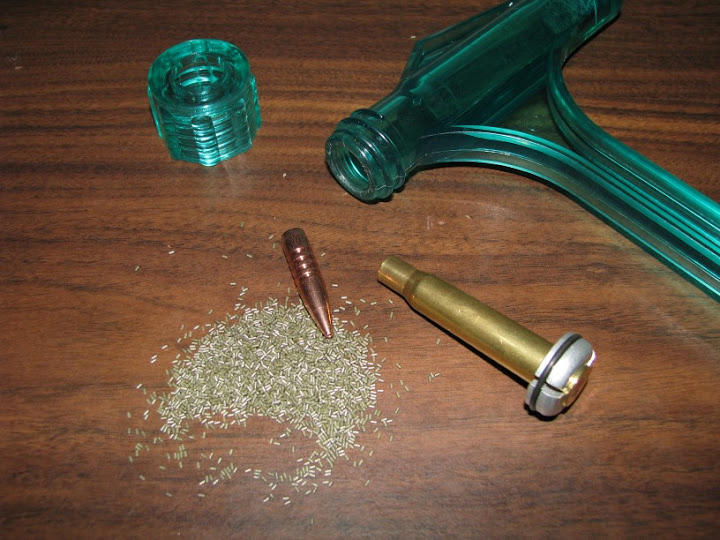
As you can see, there are only 3 parts to a bullet puller. The handle, the collet, and the collet cap.
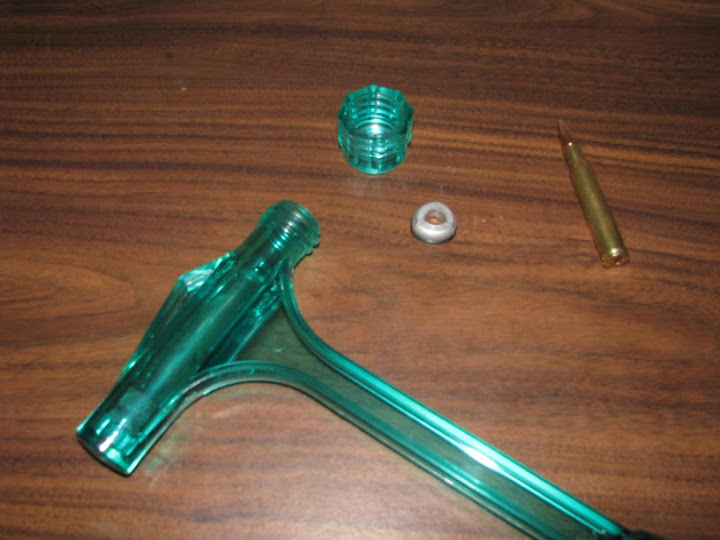
The collet (or chuck) slips over the cartridge case and grips the rim of the case as shown here:
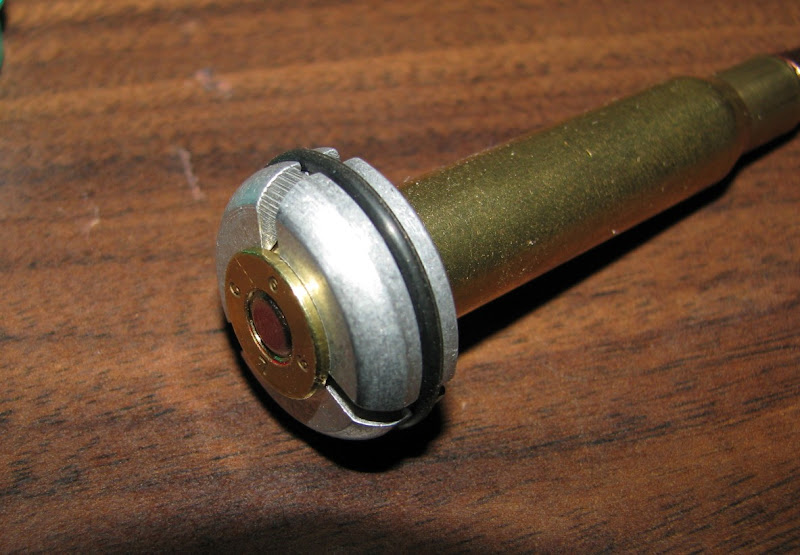
The cartridge is then placed bullet-down into the bullet puller, and the cap is screwed on to hold the collet (and cartridge) in place:
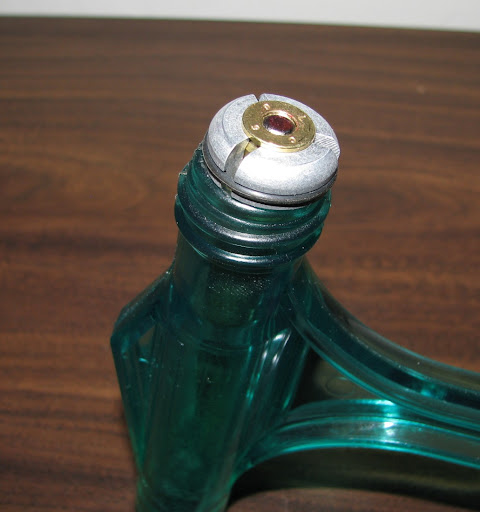
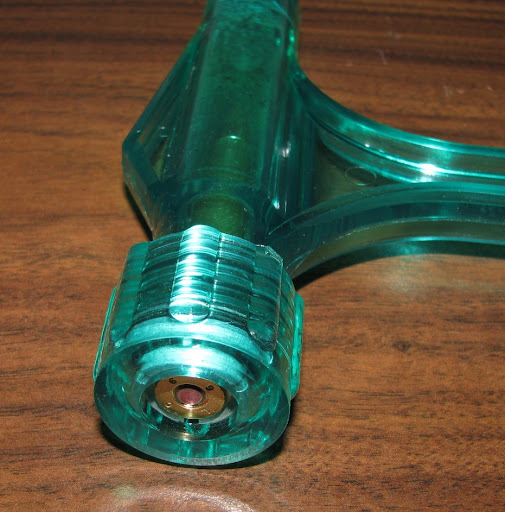
Note that there is absolutely nothing touching either the primer nor the bullet.
I figured I'd put this together to show anyone interested exactly how they work, and why they're safe.
Bullet pullers are actually very simple and safe devices. Have you ever shaken, or pounded on a glass ketchup bottle to get the ketchup to start flowing? Well, you're using essentially the same physics as a bullet puller uses. You're using gravity and kinetic energy to remove the bullet.
As you can see, there are only 3 parts to a bullet puller. The handle, the collet, and the collet cap.
The collet (or chuck) slips over the cartridge case and grips the rim of the case as shown here:
The cartridge is then placed bullet-down into the bullet puller, and the cap is screwed on to hold the collet (and cartridge) in place:
Note that there is absolutely nothing touching either the primer nor the bullet.




Comment