

 Tweet
Tweet
Do any of you folks take along a small oxygen bottle while hunting at high altitude? As I get older I feel the effects of altitude sickness more and more...thanks.
-
Gary
Never underestimate the likelihood that the Republicans will cave... -
I'm 70 and I live at 7500 ft. If I go much above 9000ft I'm screwed.
The portable ox bottles are really too small to last very long ( when I was flying light planes we kept one under a seat just in case).
The only way I know to acclimate is to increase your altitude in stages over time. Trouble is it could take too long to accomplish what you're after. -
As a SCUBA diver, and a certified rescue diver, and DAN member, I've often thought about purchasing some kind of supplemental oxygen system to keep with my first aid kit. But I never got around to it. Plus the medical systems are expensive.
I just did a search on Amazon, and this came up:

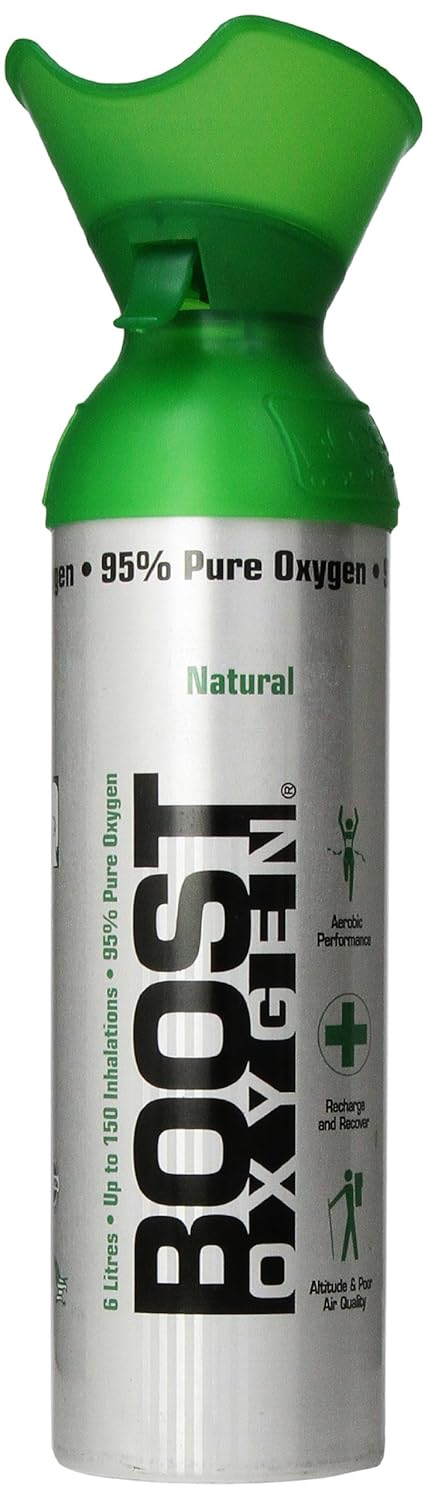
Don't know anything about it, but it looks like a handy sized contraption.
Only 3 of 5 stars in the reviews though.Comment
-
I have hiked high altitudes and am hypersensitive to altitude illnesses. Last year on the John muir trail I almost died of HAPE and HACE at an altitude that normally wouldn't hurt most people, and I am young and was in shape.
Here are some things to consider. 02 is prescription only. Even if it was a short hike on only 1-2 LPM via nasal cannula you wouldn't get very long out of a Small cylinder. Even the smallest one is still way too big and heavy to practically carry. I think you'd increase your 02 demands more than it would help with just carrying it.
What altitude are you hunting at? Age and fitness level? Time at altitude? What symptoms? Acclimating is the best option and a few drugs may help, but o2 seems highly impractical.Comment
-
Oh, and oxygen is prescription only for a reason. It can be dangerous giving someone oxygen that is already at 100% saturation. The O2 bonds can break off into free radicals and oxidize in the blood.
People are still so stuck on slamming everyone with 02 in emergencies weather they need it or not.Comment
-
Fitness has nothing to do with altitude sickness (that is, HAPE, HACE, and AMS). Everyone is susceptible to it, but not every experiences symptoms every time they go above a certain altitude. I know that about half the time I go above 10,000 feet I show some mild symptoms of AMS (lack of appetite, headache or worse) and the other half I'm fine. Acclimatization is the only real answer. Climb high, sleep low.
Barring that, you can talk to your doc about prophylactic use of Diamox (acetazolamide) or carrying some just in case. Starting a baby aspirin regimen might help while at altitude, discuss with your doc and/or a sports physician that deals with climbers. Stay hydrated, especially if on Diamox (it makes you pee which further hastens dehydration).
In a hunting situation you could do the 'climb high, sleep low' acclimatization routine by simply making your base camp at a relatively low altitude (let's say 8k) and then hiking to 10-12k during your hunt hours. Descend to 8k and sleep (if you haven't shot something). After a day or two of that you could sleep on Mt. Whitney with few to no altitude problems. Change elevations based on your personal experiences with AMS and fitness levels (don't want to have to climb 6k just to get to where you think the deer are every day); every climber/mountaineer/mountain hunter has their own acclimatization schedule.Last edited by NapalmCheese; 08-21-2014, 11:34 AM.Calguns.net, where everyone responding to your post is a Navy Force Delta Recon 6 Sniperator.Comment
-
Never said fitness did. But it can effect other things they effect altitude illness.
And that is not true about one or two days of that and you can sleep on top of Whitney for everyone. Several days of acclimation and I couldn't even sleep near Donahue pass without coughing up blood and feeling my brain squeeze. I can tell you a first night camp at 8k for me and some others would really hurt. Altitude illness is so variable person to person. I recommend this book if you want more info.
Last edited by RandyRhoads; 08-21-2014, 11:42 AM.Comment
-
Thus the proviso "Change elevations based on your personal experiences with AMS and fitness levels (don't want to have to climb 6k just to get to where you think the deer are every day); every climber/mountaineer/mountain hunter has their own acclimatization schedule."
You've provided a link to a good book, education and experience is the best route towards figuring out your own acclimatization schedule.
At any rate, yes, it's variable, but the key point remains "climb high, sleep low". That and, you can't really rush it.Calguns.net, where everyone responding to your post is a Navy Force Delta Recon 6 Sniperator.Comment
-
Amen.
And seriously. What he said. Don't rush it. Especially if you're far from help. A deer isn't worth it. It's not a fun way to die.Comment
-
If you are at high altitude, and are experiencing the symptoms of altitude sickness, then it is highly unlikely that your O2 levels will be high enough to make supplimental O2 a danger. If you have the resources there is an option that doesn't include "prescription O2".
Get a Gamow Bag.
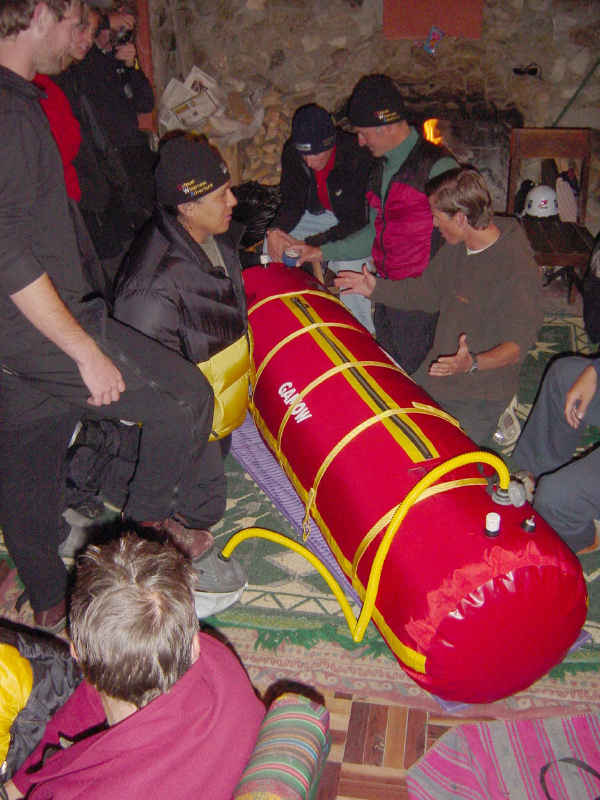
It is basically a portable hyperbaric chamber that allows you to simulate a lower altitude environment. This pressurized "sleeping bag" puts more oxygen into every breath taken in, just like being at lower altitude.
They rent for about $25.00 per day.
They sell for about $2,100.00
Designed more for emergency situations where Altitude sickness is so bad that it prevent quick movement of the individual to lower altitude.sigpic
If you haven't seen it with your own eyes,
or heard it with your own ears,
don't make it up with your small mind,
or spread it with your big mouth.Comment
-
If you know it's not for you up there, why do you tempt fates and go? I've read lots of books on mountain climbing and the lack of oxygen up there is a recurring, deadly, theme. It's part of the deal and can easily snuff you....Comment
-
Coca leaves


Comment
-
You can (and will if you are determined enough) acclimatize to the altitude. It might take longer, but your body will go through the physiological changes necessary to adapt to the high altitude environment over time. Most people can adapt to the 14k foot altitudes of the highest peaks in the US in a few days, some need more, some need less.
The lack of oxygen is not the issue at altitude (most of the time), and there is no place in the contiguous 48 states where the lack of oxygen due to altitude is deadly. Unless you have a physical condition that keeps your blood sat low normally, it's not a problem if you have acclimatized properly. The lack of oxygen really only becomes a problem around 27,000 feet. At that point it's not so much the lack of oxygen as it is a lack of pressure. The lack of pressure causes some real physiological problems, the lack of oxygen deprives your body of the fuel needed to warm itself.
If you're going to worry about something while in the mountains, worry about the weather.Calguns.net, where everyone responding to your post is a Navy Force Delta Recon 6 Sniperator.Comment
-
When I was in the Army, two weeks before we would deploy to high altitudes they would issue us: Diamox (acetazolamide), we would take it two weeks prior and until we got back. I noticed it made things with acid in it taste bad, especially carbonated beverages. But it worked for me and my wife (when she deployed too).
My translators used coca leaves.sigpic Waterborne!
Former: Knight of Front Sight &
Gold Star MemberComment
-
Prescription only?
These guys will sell you one over the internet. However, anyone considering using oxygen should get some training to understand how to avoid acute and chronic oxygen toxicity.
Oxygen emergency medical kits are required (by dive certification agencies, not the government) for all dive boats, scuba instructors, scientific and commercial dive operations. Therefore, it is easy to get oxygen cylinders and refills. I keep a large cylinder in my garage with a booster pump so I can refill my rebreather tanks without getting raped at the local dive shop.Thermidorian Reaction . . Prepare for it.We know they are lying, they know they are lying, they know we know they are lying, we know they know we know they are lying, but they are still lying. ~ SolzhenitsynComment


There are currently 21108 users online. 130 members and 20978 guests.
Most users ever online was 239,041 at 10:39 PM on 02-14-2026.


Comment