

 Tweet
Tweet
Can the nikon p223 4-12x be used on a bolt action? I was pretty sure they were marketed for AR15's.
-


-
Yes, it will work just fine.
There is generally a small height over bore difference between the two platforms, but its not enough to make a big difference when you are working with a holdover optic.
Height over bore can easily be account for and corrected with the ballistic software you use (like Nikon Spot On)Last edited by ExtremeX; 07-14-2015, 6:25 PM.ExtremeX -
Be sure to check out their Spot On website. It should help you with the BDC reticle.
Comment
-
Absolutely. One thing to check when moving to a bolt gun is that Spot On has a field to fill in scope height, that would be mid bore to mid scope, very important for longrange accuracy. I use a M-223 3-12 on a bolt as well as a M-308 on 2 of my bolt action rifles. Guy's here are really good about being decent for any question, everyone start's somewhere and no one person can know it all, well, except my wife....kidding....
Would love to see a range report with pics in the near future.
Just a FYI, Nikon is currently having a big PROMO where you can save some decent $ on M and P-Series optic's. Check out this site's sponsor's to see if they can help you out.
You could easily use the P-308 4-12 BDC 800 on your .223 when you enter your data into Spot On.
Comment
-
Nikon figured out to make a BDC reticle work with the SpotOn software. I never have liked BDC reticles, but the free SpotOn software will help novice shooters understand more about ballistics. I don't have any BDCs yet, except for my ACOG, but if I went BDC, I'd definitely go Nikon. That SpotOn program is nifty, but it isn't really that useful for me, personally with my applications.
Now, as far as mounting the scope on a bolt action rifle, do it. If the bolt action has too much recoil for the scope, even in 50 BMG, then the scope ain't worth beans and you are best tossing it in the garbage. If scopes can't take recoil, then they cannot take other natural abuses that will occur. The one you do need to be a little careful of are those spring snap air rifles as they have the weird multi-directional recoil that some scopes aren't designed for.Comment
-
I’m in the same boat… I don’t own a single BDC optic aside for my ACOG TA31F.
I think Spot On is good tool for someone who is learning, it helps people understand the concept of ballistics, working with their scopes, and how to conceptualize a shot, but as someone who has experience with setting up a firing solution and building a dope sheet… I can’t stand the software, heck I don’t even like their scopes that much, primarily due to the way they are setup.
Everything is in inches and in “clicks”… Its all scope model specific, and unless I’m I don’t see it on the website, nothing is translated into MOA or MIL for correction. Getting correction in inches of drop at an unknown distance is just silly.
I feel it doesn’t really teach you anything to move forward with ballistics aside from what holds they provide and how many clicks to move a dial. The software feels like it’s designed to keep you stuck inside the Nikon family of scopes…
If you take a close look at everything in their P and M series of scopes, it’s all 1” tubed optics. Nothing they sell is really designed to dial… it’s all pretty much a hybrid, hunting scope made to look like a target scope including many of their high magnification targets scopes… Even the Monarch 6-30x50 is a 1” tube with 30 MOA of internal correction, all for a whopping $1000
Makes you wonder what they were thinking when they designed it.ExtremeXComment
-
I agree with your concerns, but in fairness, I do understand how that is the point of your BDC--you don't dial. The marks are for holding over. Realistically, folks that are using BDC reticles aren't shooting very far.
For dialing and to get to long distances, you want good Mil/Mil or MOA/MOA turrets and a larger tube to allow for elevation. It actually concerns me more when I see companies using small tubes then advertizing some ridiculous elevation adjustment like 35 Mil. To me that shows that they are letting the erector run to the very bottom up to the very top and brining in a lot of distortion and tracking issues, and the internal system is inevitably very weak.
The problem I have is this new way people have reinvented the wheel by trying to translate everything into distance of target. It adds layers of unnecessary complication as it is far easier to keep things in angles.
The adjustment in inches has already been done for decades before they had nice dialing scopes. The small 1" or 30mm scopes are better for hunting. What's been done for years is that you can get the job done with a $20 scope that has a plain crosshair reticle and no dialing as the inexpensive hunting scopes. The process is to set your zero at 3" above the bullseye at 100 yards. As anyone who has shot knows that 3MOA is going to be pretty darn close, within an inch at 300 yards in just about every cartridge. Bullets slow very little in the first hundred yards of flight; thereafter, the velocity decays exponentially. Thus, shooting with a 3" zero at 100 translates to hitting game at any distance from 0-350 yards, which is practical. If you put the target in your crosshair, for 0-350 yards, you aren't going to be off by more than 3", which is your hundred hard zero. So, this old method works just fine for folks for which their practical range is 0-350 yards. Then, inside 100 yards, say 25 yards, with a relatively low scope, your 25 yard zero is similar to your 300 yard zero unless you have a lot of bore height, which isn't desirable for a lighter weight hunting rifle anyway.
You'd never win a precision match that way, but it gets you within a close enough range for things other than squirrels. The squirrel hunters actually use a fair amount of precision since they are aiming for a small target.
So, really this whole drops in inches has been around for a long time; it is just being repackaged and sold as a gimmick. What I like about the Nikon with the SpotOn software, which I am not that familiar with but have tried a few passes, it at least gets shooters to think about important factors like muzzle velocity, ballistic coefficients, wind, and density altitude, which are important factors that one will want for more accurate shooting.
I haven't used an actual Nikon Scope, I'd not have much expectations from it due to the low prices, but Nikon is at least a reputable name in optics so it seems that they have given the BDC stuff a bit more thought. I'd prefer to see people use that over blindly aiming at a hashmark that is preset without regard to the actual cartridge and rifle. It enables them to at least see the different characteristics of the rifle and bullets they are using.
The traditional Mil/Mil dialing system is far easier once you learn it, which doesn't take long if you have a basic understanding of trigonometry. At least this will let folks get their feet in the door and hopefully work their way into a real setup.Comment
-
I will agree Nikon is a well-respected reputable brand in optics… but I think their sport optics division has a really unique vision when it comes to their scopes.
You and I agree on many points… I too mentioned some of those points too as in getting shooter to think about MV, BC, DA, wind, keep things in angles and all that good stuff… I’ll also agree it’s a good step in the right direction if you are getting your feet wet but they could have model the spot on software around a traditional rifle scope too. My issue isn't with spot on, but more with their scope design. In the future they could easier add the angular unit of measurement to the software but you cant change the scope. At least Vortex gives you actual reticle subtension measurements in MOA for ALL their BDC reticles.
I was just making comments on my observations using the scope in the field, and coming from correctly setup target scopes, I found it pretty weird.
Going back to your comments about BDC, dialing, 1” tube, elevation travel and dialing… Here is an example of the Nikoplex reticle model… You either just trust the dial, or count 1/4" MOA clicks till you get what you want.
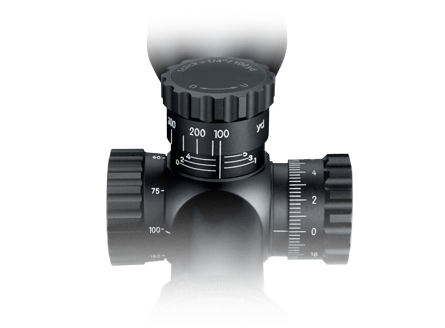
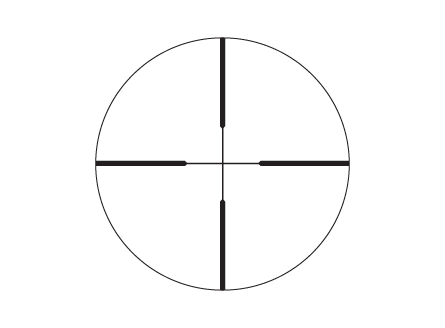 Last edited by ExtremeX; 07-16-2015, 1:11 AM.ExtremeX
Comment
-
In that scope, I'd not dial it. The turrets are one other inevitable part of the scope that are very weak in cheap scopes.
The example I gave was to illustrate that BDC shooters don't really need to dial. BDC shooters are for people learning and not shooting very far or with cartridges of ballistic efficiency. I suppose, if you wanted BDC plus a dialing reticle, something like the H59s work because you can shoot all you want at closer ranges without moving the dial since the marks are all provided, then for shooter further, the scopes with the H59 reticles act the same way normal scopes do. However, getting an H59 normal scope is then going to put you in a more expensive league (over $1,000) so you will have other options on the table as well.
I am just noticing that the trend for learning and low end scopes is to BDCs. Personally, if one just needs to get his foot in the door because of price, I'd stick to something like the cheap SWFAs since they are normal scopes at prices you can learn on. They are okay, just no frills, probably better built than the BDC stuff too.
I'd skip BDC altogether in dialing scopes, but that has gone out the window with the new BDC fad. Shooting to 500m does not require dialing. Shooting to 1.5km requires dialing so it depends on the user's end goal. When I started out shooting, I never even dreamt that I'd shoot to 1.5km. Then when I could shoot to 1.5km/1mile, I thought that was pretty much the end game. Now, I am shooting to unlimited distances using all kinds of crazy devices.
I started on an FFP MOA/MOA traditional scope. If I could do it over again, I'd do the same thing. BDC makes sense on an ACOG to me, but for dialing scopes, I still believe one should use a traditional system. After learning it, it will make things easier. On my scoped rifles I toggle between about 10 cartridges and it is no problem when you have the fundamentals.Comment
-
Since I already have the nikon p223(Cannibalised off my AR15 that is on consignment in colorado that I can't import...)
What can I do about the crummy BDC turrets?
Comment
-
Shoot it till it fails.Comment





There are currently 9916 users online. 171 members and 9745 guests.
Most users ever online was 239,041 at 10:39 PM on 02-14-2026.


Comment