

 Tweet
Tweet
Thanks Greg. I like the gel block tests. I dont know why I didnt look that one up. Appreciate the post man.
-
-
The bottom line on that photo is that there is no significant difference between the pictured calibers. That's the point of the 12" line. In pistol calibers, penetration is the most important performance criteria. Therefore, shot placement is key.
Physical disruption to the central nervous system is the only guarantee to immediate incapacitation. Don't be mislead with "energy transfer", "stopping power", "one-shot stops", and "temporary cavitation". Those terms are nothing but hokus pokus in pistol calibers.Last edited by 8200rpm; 04-09-2009, 9:16 PM.Comment
-
I think the 357 Sig has the largest ruptured area, I'd like to see what a 125 grain at 1450 fps will do. It's nice to have a round that will provide a big hydrostatic shocking power plus penetration with a projectile expansion of .65 or greater. If you want one shot stopping power you may have better luck relying on a 12 gauge #4 buckshot or a rifle loaded with soft point bullets.The wise man said just find your place
In the eye of the storm
Seek the roses along the way
Just beware of the thorns... K. MeineComment
-
Marksmanship beats "Knock-Down" power or any other scientific measurement of muzzle energy.Comment
-
It's hard to be a marksman with bullets flying in your direstion.Comment
-
But I have a laser on my gun and so will have perfect aim.Comment
-
You shouldn't be looking for one shot stops. You should be shooting the caliber that you shoot most accurately, and take a class to learn how to use it most effectively.
As Louis Awerbuck told me, at any distance, you should be shooting the speed at which you can keep a 4 inch group. Any larger and you'll risk missing vital areas, and any smaller and you're shooting too slowly. And don't believe what anybody says about stopping power. You can shoot someone all you want, but when he goes down is entirely up to him.Comment
-
Books?
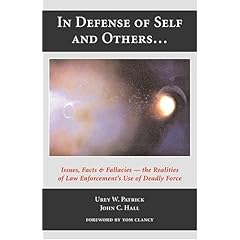
-- MichaelComment
-
Thanks Squid.
I agree that marksmanship is key, I was just interested in the prowess of the different calibers. Thanks guy s for this valuable feedback.Comment
-
Worry about shot placement, not caliber. A miss with a 50BMG won't do much (other than possibly cause a wet spot).
If you are not sure about your aim, always have one of these handy.
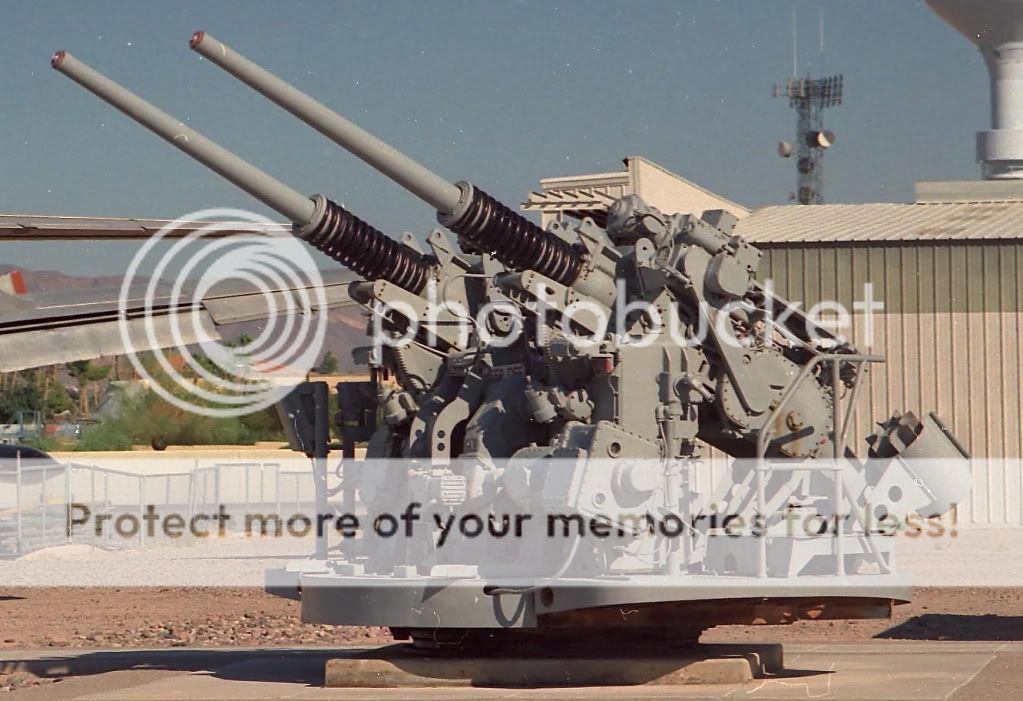
Comment
-
Even .50 BMG is no guarantee:
"Beckwith commanded a Special Forces unit code-named Project Delta in Vietnam. He was critically wounded in early 1966 (he took a .50 caliber bullet through his abdomen), so badly that medical personnel initially triaged him as beyond help.[2] After recovery, he took over the Florida Phase of the US Army's Ranger School, transforming it from a scripted exercise based upon the Army's World War II experience, into a Vietnam-oriented training regimen."
I don't remember who said it, but if you're in a gun fight, you have to be
"the firstest with the mostest."The way some gunshop clerks spout off, you'd think that they invented gunpowder and the repeating rifle, and sat on the Supreme Court as well.
___________________________________________
"An unarmed man can only flee from evil, and evil is not overcome by fleeing from it."
- Jeff Cooper
Check my current auctions on Gunbroker - user name bigbasscat - see what left California before Roberti-RoosComment
-
+1. In the real world, there will be little difference between .380, 10mm or anything in between as far as how quickly it puts a BG down.
It smaller, yes, but not significantly.
Hydrostatic shock isn't a wound characteristic. Temporary cavity is caused by stretch, it's basically deep bruising.Comment


There are currently 4626 users online. 123 members and 4503 guests.
Most users ever online was 65,177 at 8:20 PM on 09-21-2024.


Comment