Unconfigured Ad Widget

Collapse

match ammo questions

Collapse
X
 
  • Time
  • Show
Clear All
new posts
  • armyguy209
    Member
    • Jan 2013
    • 335

    match ammo questions

    Ok guys. I am really starting to get into making match ammo now. I love shooting and the 1050 works great for plinking rounds, and even those are pretty accurate.

    I just got my Remington 700 AAC-SD .308 dropped into the accuracy international AICS 2.0 stock. I am going to be getting a scope for it soon after the holidays. I want to start making loads that are capable of 5 shot clovers at 100 yards +. I know a lot has to do with the shooter but the ammo makes a huge difference.

    Now that I got my Giraud trimmer, I am using that and my Forster Co-Ax to make the match stuff. I have some Whidden gunworks dies for my .308 stuff and am probably going to order a set of .223 from them as well. They have really nice dies. I pressed out 100 cases of 07' headstamp LC brass last night with my Dillon .223 dies on the Co-Ax. They were inconsistent which bugs me. I know the Dillon dies aren't specifically made for match ammo but they still do pretty good.

    I also have the K&M primer pocket uniformer and the K&M flash hole uniformer. How much of a difference in consistency do you think the match dies make over the normal dies? Another thing I noticed is that most match die sets don't come with a crimping die. Do match rounds not get crimped? From what I have read, even match rounds get crimped to have a consistent neck tension.

    The other thing is I like my brass super duper shiney. The wet tumbler gets them pretty shiney but by the time you keep touching them they lose some of the shine. I was considering adding a regular vibratory tumbler just to finish the rounds off in before packaging them in the boxes. I read that people tumble in corn cob and flitz with their completed rounds and it puts a super shine on the brass. I'm not sure how safe it is to tumble live ammo though, or if it messes them up at all for longevity/accuracy. Anyone do this and if so what are you results?
  • #2
    thenodnarb
    Veteran Member
    • May 2009
    • 2603

    I hate saftey nazi's, but I wouldn't vibrate live ammo. I suppose you could try brasso polish which would be safer.

    In my experience, load experimentation is the single most important aspect of accuracy. You will find a load with a certain bullet, velocity and powder that will harmonize with your barrel. For example, in my ar-15, with the same bullet, primers and velocity, my rifle will shoot 1 moa with BLC-2 and 2 moa plus with varget. Your rifle might be the exact opposite.

    Once you find your accuracy load, then focus on the little details like conisitency amongst cases and consistent powder charges. I'd bet that uniforming primer pockets and flash holes have a very small effect in the scheme of things.

    Look at known accuracy loads with your rifle/stock system. Chances are that someone else has your exact setup, and has found an accuracy load that will be very close to what your rifle will like.

    Good luck!

    How I Powder Coat Pistol Bullets
    How I Powder Coat Rifle Bullets

    Comment

    • #3
      gemoose23
      Senior Member
      • Jun 2009
      • 1079

      I am a BAD F-Class shooter... But you should 1st decide what Bullet you are going to shoot. Acquire more than enough of those bullets for practice and any matches you will attend next year.

      Then pick a powder, shooting .308 Win, there is a lot of data out there available, pick something available or meets your data needs. (i.e. I shoot a 155gr Sierra Palma that has a Higher BC at 2900+ fps, soo I use a powder that gets me that MV)

      From there just be consistent on how you load your ammo, I have the same pattern/processes for all of my match ammo that I prepare for practice or Matches. This gives me consistency in Ammo.. so I can work on everything else on the practice range or match to shoot those X's.

      I never crimp my ammo.. neck tension is enough, I don't have push back in my bolt gun so I never worried about it. Next year will be interesting, since I should be replacing my brass Mid year, so it will be interesting to see how new brass and my more knowledge on reloading for my rifle effects my processes (i.e. adding annealing to a process, replacing brass sooner)
      Last edited by gemoose23; 11-27-2013, 12:31 AM.
      Hornady LnL, Dillon Precision, RCBS, Lee Precision and Lyman User
      If You want Match or Leadless hunting Ammo check out Monolithic Munitions Yes I am a shill, friends with the owners.

      Comment

      • #4
        Multra
        Banned
        • Jun 2012
        • 179

        I would pick up a seating die that has a micrometer on it, and if you are loading VLD's get a die that can handle them. The CBTO on my rounds with a Forster ultra die are all within .003 of each other at least. I would say it is worth it.

        It is safe to tumble live rounds.

        Comment

        • #5
          23's Dad
          Senior Member
          • Jun 2010
          • 502

          Couple of comments...

          Originally posted by armyguy209

          Now that I got my Giraud trimmer, I am using that and my Forster Co-Ax to make the match stuff. I have some Whidden gunworks dies for my .308 stuff and am probably going to order a set of .223 from them as well. They have really nice dies. I pressed out 100 cases of 07' headstamp LC brass last night with my Dillon .223 dies on the Co-Ax. They were inconsistent which bugs me. I know the Dillon dies aren't specifically made for match ammo but they still do pretty good.

          I also have the K&M primer pocket uniformer and the K&M flash hole uniformer. How much of a difference in consistency do you think the match dies make over the normal dies? Another thing I noticed is that most match die sets don't come with a crimping die. Do match rounds not get crimped? From what I have read, even match rounds get crimped to have a consistent neck tension.

          The other thing is I like my brass super duper shiney. The wet tumbler gets them pretty shiney but by the time you keep touching them they lose some of the shine. I was considering adding a regular vibratory tumbler just to finish the rounds off in before packaging them in the boxes. I read that people tumble in corn cob and flitz with their completed rounds and it puts a super shine on the brass. I'm not sure how safe it is to tumble live ammo though, or if it messes them up at all for longevity/accuracy. Anyone do this and if so what are you results?
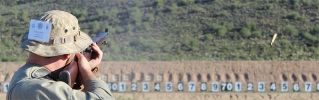
          1) I love my Forster press!
          2) If Whidden starts making a .223 die set, let me know! The last time I visited their site, I was disappointed that they weren't listing .223 dies.
          3) Some people have reported inconsistent neck tension when using SS tumbling - there are a couple of articles on AccurateShooter that discuss the added importance of case neck graphite when SS tubmbled rounds are used for accuracy.

          Question: Your LC07 brass was "inconsistent"? What do you mean? Are you talking about Case Lengths?

          When I process match rifle brass, each individual case seems to lengthen a bit, and not the same amount - but it all gets trimmed to spec.

          Comment

          • #6
            J-cat
            Calguns Addict
            • May 2005
            • 6626

            Inconsistent case neck tension has nothing to do with wet tumbling. It has everything to do with the case metallurgy.

            When you introduce lubricants such as neck lube and carbon fouling, case neck tension is masked and becomes difficult to isolate and measure. Look at factory ammo: it has pristine necks because the cases are wet tumbled to remove all the lube from the forming process.

            Comment

            • #7
              J-cat
              Calguns Addict
              • May 2005
              • 6626

              Regarding accuracy, get some Varget and 168gr Hornady bullets. Load 43-44 grs in your LC brass.

              Comment

              • #8
                Roach
                Junior Member
                • Jul 2009
                • 42

                I dont have fancy competition dies, just trusty old RCBS standard stuff. Also once you shoot enough you wont care about shiny brass it only has to be clean enough to easily inspect.

                I dont weigh cases or turn necks, but I do use LC LR or Lapua.
                42 grains of Varget
                175 SMK
                LC LR Brass
                GM210M primer
                2.800 OAL

                Good for .5 MOA out of a stock savage fcpk

                Comment

                • #9
                  Metal God
                  Senior Member
                  • Apr 2013
                  • 1839

                  I use a FL bushing die for my 308 match loads . No neck lube needed because you don't use the expander ball .The bushing is floating inside the die and that makes sure your neck is perfectly centered on the case. When using a bushing die , you measure the out side neck diameter of a loaded cartridge then use the bushing .001 to .002 smaller . I have .0015 of neck tension/bullet hold and for my target bolt gun thats seems to work just fine . I have a hunting rifle I don't crimp so I use .003 of bullet hold/neck tension just to make sure I don't get any bullet set back in the field . if you use the right bushing you can even do soft seat with them .. Of course you have to load one bullet into the rifle at a time with neck tension that light .

                  I'm sure you know but let me add all brass ( different head stamps ) will size a little different . What I do is size 6 to 10 cases to see what my average case size will be . If the die is way off by .003 or more I adjust the die down to where almost all get sized from .0015 to .0025 longer then brass fire formed to my chamber . I don't know what my % of longer cases are by doing this .003 to .0035 longer maybe 5% . For those I use feeler gages from my local auto parts store . They are VERY thin strips of metal that are sized from .001 thick and up to way thicker then you will need . You place the proper sized feeler gage in between the the bottom/case head and shell holder and size again .

                  Meaning
                  You FL size your cases and your looking for it to be 1.623 Datum to head but it measures 1.6245 . You then take your .0015 feeler gauge and place it in between the case head and shell holder and size again . That should bump the shoulder back to 1.623 or at least 1.6235 . They make special sized shell holder sets that do the same thing . Shell holder set $50 - feeler gauges $6

                  Cases can be a little fussy when trying to size them to with in 1/5 the thickness of a piece of paper . Some times you put the feeler gauge in there and it does nothing to the size so you use the next size gauge and that some how bumps the shoulder to far . Some times when your just a little off .0005 / .001 you can use a little more lube to make up the difference . It's a learn as you go thing as to what will work for you

                  I would pick up a seating die that has a micrometer on it
                  Agreed . I use 5 different 308 bullets and its nice to just look at the my notes and dial the die to the correct setting .
                  Last edited by Metal God; 11-28-2013, 1:17 AM.
                  Tolerate
                  allow the existence, occurrence, or practice of (something that one does not necessarily like or agree with) without interference.

                  Anyone else find it sad that those who preach tolerance CAN'T allow the existence, occurrence, or practice of (something that they do not necessarily like or agree with) without interference.

                  I write almost everything in a jovial manner regardless of content . If that's not how you took it please try again

                  Comment

                  • #10
                    Germz
                    Vendor/Retailer
                    • Apr 2013
                    • 4691

                    Originally posted by thenodnarb
                    I hate saftey nazi's, but I wouldn't vibrate live ammo. I suppose you could try brasso polish which would be safer.


                    Good luck!
                    do not use brasso or any other ammonia based cleaner. this makes brass brittle and you would be wasting away good match brass. vibrating your ammo does nothing harmful to it.
                    Retired Account

                    Comment

                    • #11
                      NorCalFocus
                      Veteran Member
                      • Aug 2013
                      • 3913

                      Don't know if it needs to be said, but get a good electronic scale and weigh each powder charge. That for me is the area with the most room for error.

                      Comment

                      • #12
                        Roach
                        Junior Member
                        • Jul 2009
                        • 42

                        Originally posted by Germz
                        do not use brasso or any other ammonia based cleaner. this makes brass brittle and you would be wasting away good match brass. vibrating your ammo does nothing harmful to it.
                        Hodgson and other powder manufactures say differently. Wtf is the obsession with shiny brass just shoot it.

                        Comment

                        Working...
                        UA-8071174-1