

 Tweet
Ive been following a youtube channel called ?Shooting with the Lillys?. A couple of years ago, they posted a video on Satterlee v2.0 load development.
As I understand, it goes like this.
Use the max load provided by the powder maker. Satterlee actually states, max loads from Hodgdon are safe.
Conduct seating depth tests, 3-5 per.
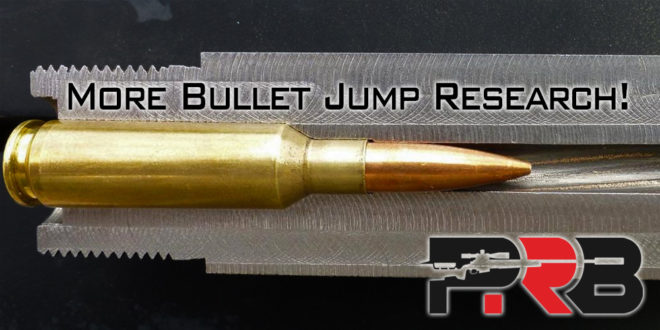
Load the bullets from 0.005 to 0.015 in 0.003 increments.
Shoot them at 100 yards and evaluate groups with a focus on vertical dispersion. (The vid on it explains that in greater detail).
The result can be further refined such as smaller test on seating depth. Or even go further from the lands.
Since I already worked up a load, and have a powder charge that is already over Alliants recipe, I decided to stick with my powder charge. I just loaded up the ammo with different seating depths. Tests came back with good data.
My best load that day came from the furthest from the lands that I seated. 0.015.
6.5CM Hornady 140 ELD-M with 43.1 gr Reloder 16 2831 fps Alpha cases Federal 210M.
The winning load, furthest from the lands that I loaded at 0.015", a 0.366" group

The other loads...
depth at 0.005

0.008

Not sure what to make of 0.012. Vertical dispersion is excellent, but I got that one round fly left. The groups just get better the further I am from the lands on this rifle.

Satterlee was pretty upfront that this method isnt definitive. It will get anyone very close to a great load in as little as 12 rounds. Shortening load development for PRS shooters is important as they burn barrels like no tomorrow, and cant be developing loads OCW style all the time. That further refinement can be done.
He did mention something that resonated with me. This method is a distillation of a lot of techniques, and that its main purpose is to serve those that dont wanna spend a lot of time developing a load to the degree where it adds results that are not worth the time and effort required for some people. He recognizes what the benchrest guys do will take load dev to the Nth degree, and its up to the person to decide if he wants to go there.
What I unpacked from the v2.0 method is that 1) speed is less important 2) speed nodes as a result are less important but instead this method focuses on 3) controlling pressure spikes created by the powder charge relative to when the bullet hits the lands (rifling) is what makes for an accurate load. He's basically saying, pick any reasonable powder charge and you can make it work based on where you seat the bullet.
I have a 75gr 223 load that I would really like to get to touch each other on a 5 round group. I'm going to see if I can do these same tests on a gas gun soon and get similar results.
This method is not shared to say your process is wrong. Its just another method out there
As I understand, it goes like this.
Use the max load provided by the powder maker. Satterlee actually states, max loads from Hodgdon are safe.
Conduct seating depth tests, 3-5 per.
Load the bullets from 0.005 to 0.015 in 0.003 increments.
Shoot them at 100 yards and evaluate groups with a focus on vertical dispersion. (The vid on it explains that in greater detail).
The result can be further refined such as smaller test on seating depth. Or even go further from the lands.
Since I already worked up a load, and have a powder charge that is already over Alliants recipe, I decided to stick with my powder charge. I just loaded up the ammo with different seating depths. Tests came back with good data.
My best load that day came from the furthest from the lands that I seated. 0.015.
6.5CM Hornady 140 ELD-M with 43.1 gr Reloder 16 2831 fps Alpha cases Federal 210M.
The winning load, furthest from the lands that I loaded at 0.015", a 0.366" group
The other loads...
depth at 0.005
0.008
Not sure what to make of 0.012. Vertical dispersion is excellent, but I got that one round fly left. The groups just get better the further I am from the lands on this rifle.
Satterlee was pretty upfront that this method isnt definitive. It will get anyone very close to a great load in as little as 12 rounds. Shortening load development for PRS shooters is important as they burn barrels like no tomorrow, and cant be developing loads OCW style all the time. That further refinement can be done.
He did mention something that resonated with me. This method is a distillation of a lot of techniques, and that its main purpose is to serve those that dont wanna spend a lot of time developing a load to the degree where it adds results that are not worth the time and effort required for some people. He recognizes what the benchrest guys do will take load dev to the Nth degree, and its up to the person to decide if he wants to go there.
What I unpacked from the v2.0 method is that 1) speed is less important 2) speed nodes as a result are less important but instead this method focuses on 3) controlling pressure spikes created by the powder charge relative to when the bullet hits the lands (rifling) is what makes for an accurate load. He's basically saying, pick any reasonable powder charge and you can make it work based on where you seat the bullet.
I have a 75gr 223 load that I would really like to get to touch each other on a 5 round group. I'm going to see if I can do these same tests on a gas gun soon and get similar results.
This method is not shared to say your process is wrong. Its just another method out there




Comment