

 Tweet
Tweet
I just finished loading 322 rounds for the Berger Southwest Nationals last night. It's a long process, but finally got it done.
The Berger Southwest Nationals is a long range event for F-Class and Highpower shooters, where over the course of 3 days, you are shooting anywhere from 800 to 1,000 yards, with a total of 125 rounds for record for the main event.
I finished all the rounds and I was quite pleased with the consistency in the seating pressure. Out of 237 rounds of 7mm I did, I maybe had 2 rounds that felt noticeably different when seating the bullet.
For those wondering, here is what I am doing:
Bullet Prep
* Point bullets using a Whidden Pointer die for a 7mm bullet. I only close the meplat by about 30-40% as the meplat hole is quite large for the 180gr hybrid bullet. (I do not point anything else)
* Sort by OAL (overall length).
(I do not sort by base-to-ogive and I do not weigh bullets. I won't go into length why, but let's say that I have tested and tested and it is my belief that the juice isn't worth the squeeze)
Brass Prep
**I started with virgin brass weighed within a grain of each other and do not mix them up after that. I also turned and cleaned up the necks a bit to get a little more consistency in the neck thickness. **
* Wet Tumble to take off majority of dirt with SS pins using a Harbor Freight Tumbler.
* Drying - Toaster oven, set at 225 degrees for 30-40 minutes
* Annealing on a Benchsource. I do this every 2-4 firings typically.
* Lube - Hornady One Shot.
* Sizing - Custom non-bushing Whidden Die on a Forster Co-Ax. I had switched to a custom Whidden FL non-bushing die with a custom neck OD of 0.309" inches. This gives me a sized ID such that when I use an expander, it just kisses the inside of the neck and finishes it to 0.310". My loaded round is 0.312".
* Trimming/Chamfer/Deburr on a Giraud Trimmer. This has saved me boat loads of time as it trims, chamfers and deburrs in one shot. I have the case holder set with a lock ring to get a consistent trim length when I do changeovers and have a cutter that is set specifically for the 7mm cartridge.
* Dry Tumble to remove lube on a Cabelas Dry Tumbler. I do not wet tumble after. Reason being, I think it is too long of a process and I think it gets the brass almost too clean for seating bullets.
I do not touch the flash holes and I do not cut the primer pockets. I do not even clean the primer pockets religiously. I might knock off the carbon every 4-6 firings...maybe
Primer, Powder and Seating Process
* Primer Seating on a RCBS Auto Priming Tool - Great tool by the way
* Powder Dump - Lee Perfect Powder - No fancy powder dumping needed as I trickle up anyways. The Lee powder mesaure gets me within 0.2 grains consistently.
* Powder Charge Weighing - A&D FX 120i - best value electronic scale that allows me to essentially load ammo to the kernel.
* Powder Trickler - By Hand No fancy trickler needed. I am quite fast by hand.
* Seating - Whidden Seater Die on a Forster Co-Ax. I am getting very consistent runout. I fully believe runout does not matter and the only reason I measure it is to make sure my set up is not yielding large runout numbers because that is more of an indicator that something in my set up is off.
Loaded Round Validation and Measurements
* I believe runout does not matter and the only reason I do it is to make sure my set up is not yielding large runout numbers because that is more of an indicator that something in my set up is off.
* I spot check my loaded round base-to-ogive numbers. I do not load load within 0.001" of each other. I simply seat the bullets. During my spot check, the most I saw was maybe 0.003-0.005" difference.
* I weigh my loaded rounds and will batch them in similar piles, usually 1/2-1 grain batches and shoot them in batches.
* I will normally shoot a small sample of the ammo to make sure it still groups well. Let's say that the load shot into the high 1's, low 2's at 100 yards for 5 shots. The barrel I am taking only has 140 rounds down it...perfect
All this results in great, accurate ammo that seems to be working for me and what I have been doing for about a year now and have had some success with this process in matches.
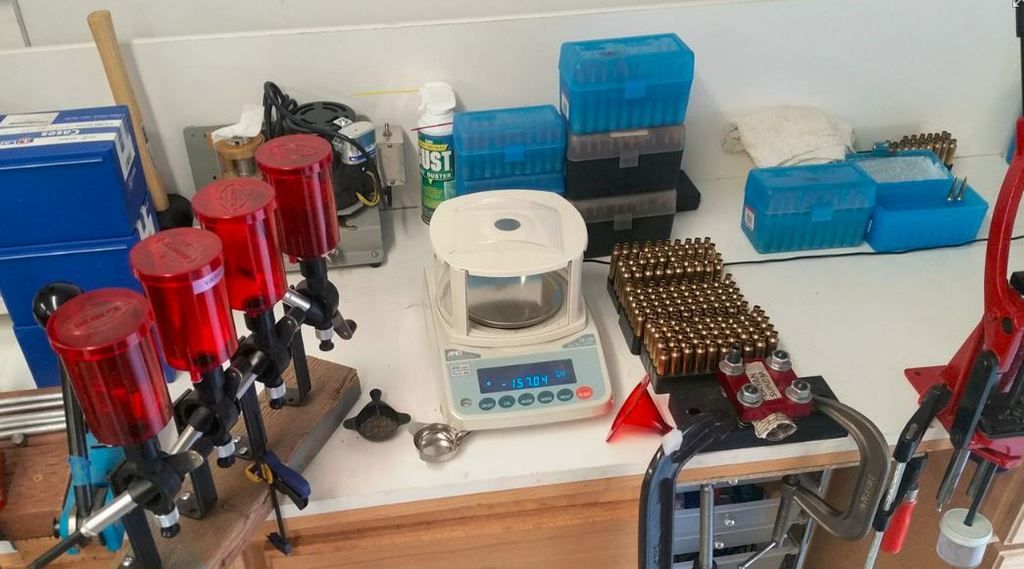
As you can see, the brass isn't that pretty. But, I'll put my rifle and ammo up against any other person's ammo any day

The Berger Southwest Nationals is a long range event for F-Class and Highpower shooters, where over the course of 3 days, you are shooting anywhere from 800 to 1,000 yards, with a total of 125 rounds for record for the main event.
I finished all the rounds and I was quite pleased with the consistency in the seating pressure. Out of 237 rounds of 7mm I did, I maybe had 2 rounds that felt noticeably different when seating the bullet.
For those wondering, here is what I am doing:
Bullet Prep
* Point bullets using a Whidden Pointer die for a 7mm bullet. I only close the meplat by about 30-40% as the meplat hole is quite large for the 180gr hybrid bullet. (I do not point anything else)
* Sort by OAL (overall length).
(I do not sort by base-to-ogive and I do not weigh bullets. I won't go into length why, but let's say that I have tested and tested and it is my belief that the juice isn't worth the squeeze)
Brass Prep
**I started with virgin brass weighed within a grain of each other and do not mix them up after that. I also turned and cleaned up the necks a bit to get a little more consistency in the neck thickness. **
* Wet Tumble to take off majority of dirt with SS pins using a Harbor Freight Tumbler.
* Drying - Toaster oven, set at 225 degrees for 30-40 minutes
* Annealing on a Benchsource. I do this every 2-4 firings typically.
* Lube - Hornady One Shot.
* Sizing - Custom non-bushing Whidden Die on a Forster Co-Ax. I had switched to a custom Whidden FL non-bushing die with a custom neck OD of 0.309" inches. This gives me a sized ID such that when I use an expander, it just kisses the inside of the neck and finishes it to 0.310". My loaded round is 0.312".
* Trimming/Chamfer/Deburr on a Giraud Trimmer. This has saved me boat loads of time as it trims, chamfers and deburrs in one shot. I have the case holder set with a lock ring to get a consistent trim length when I do changeovers and have a cutter that is set specifically for the 7mm cartridge.
* Dry Tumble to remove lube on a Cabelas Dry Tumbler. I do not wet tumble after. Reason being, I think it is too long of a process and I think it gets the brass almost too clean for seating bullets.
I do not touch the flash holes and I do not cut the primer pockets. I do not even clean the primer pockets religiously. I might knock off the carbon every 4-6 firings...maybe
Primer, Powder and Seating Process
* Primer Seating on a RCBS Auto Priming Tool - Great tool by the way
* Powder Dump - Lee Perfect Powder - No fancy powder dumping needed as I trickle up anyways. The Lee powder mesaure gets me within 0.2 grains consistently.
* Powder Charge Weighing - A&D FX 120i - best value electronic scale that allows me to essentially load ammo to the kernel.
* Powder Trickler - By Hand
No fancy trickler needed. I am quite fast by hand. * Seating - Whidden Seater Die on a Forster Co-Ax. I am getting very consistent runout. I fully believe runout does not matter and the only reason I measure it is to make sure my set up is not yielding large runout numbers because that is more of an indicator that something in my set up is off.
Loaded Round Validation and Measurements
* I believe runout does not matter and the only reason I do it is to make sure my set up is not yielding large runout numbers because that is more of an indicator that something in my set up is off.
* I spot check my loaded round base-to-ogive numbers. I do not load load within 0.001" of each other. I simply seat the bullets. During my spot check, the most I saw was maybe 0.003-0.005" difference.
* I weigh my loaded rounds and will batch them in similar piles, usually 1/2-1 grain batches and shoot them in batches.
* I will normally shoot a small sample of the ammo to make sure it still groups well. Let's say that the load shot into the high 1's, low 2's at 100 yards for 5 shots. The barrel I am taking only has 140 rounds down it...perfect
All this results in great, accurate ammo that seems to be working for me and what I have been doing for about a year now and have had some success with this process in matches.
As you can see, the brass isn't that pretty. But, I'll put my rifle and ammo up against any other person's ammo any day


Comment