Unconfigured Ad Widget

Collapse

Question on wattage/voltage for smart phone (android) charging

Collapse
X
 
  • Time
  • Show
Clear All
new posts
  • #16
    d4v0s
    Senior Member
    • Aug 2010
    • 1661

    Sorry that came out harsh. But yes, cheap cables will not allow ac charge, and will default to the 500mah settings. You can tell usually because the charger will get really warm.
    Originally posted by Franklincollector
    It was administered with a toothpick and placed on a street taco.

    Comment

    • #17
      MaHoTex
      Calguns Addict
      • Jul 2010
      • 5002

      Originally posted by d4v0s
      So you haven't heard of it therefore it doesn't exist?

      Gimme a ****ing break.

      Its called a data only cable, and they will not allow full charge unless pins 2 and 3 are shorted.

      Its also called charge only cables and chargers.
      It's all good.

      That is why I said "Not that it doesn't exist, I just have not seen..."

      I will have to go see what the shorting of pins 2-3 does. I haven't seen cables with pins 2-3 shorted either, but, I have seen them with pins 2 & 3 removed.

      ETA: The USB cable, if shorting pins 2 & 3 together, would no longer be a "USB cable" but a charging cable. I am going to go poke around and see about the pins 2 to 3 short in a charging cable and research the design concept behind it.
      ETA2: It appears the chargers which you plug the USB cable into are where the short is made. It connects the D+/D- lines together to tell the device to allow more current for charging. Otherwise the device will limit the draw to < 500ma.
      Last edited by MaHoTex; 12-14-2013, 4:34 PM.
      NRA Life Member

      sigpic

      Mr. President, I can't take any more winning! Make it stop Mr. President. The winning is YUGGEEEE!

      "If you've got a problem with the US, you better make sure it's not a military problem." SSgt Leslie Edwards

      Comment

      • #18
        sl0re10
        Calguns Addict
        • Jan 2013
        • 7242

        Originally posted by bombadillo
        So I have had a lot of issues with the chargers not working from one phone to another. My Galaxy SIII won't charge higher than 60% when I use one of the HTC plugs, and the chargers that I have are seemingly starting to suck. I wanted to find a good, high wattage/voltage or whatever it is, to charge my phones fast, full, and without issue. Right now I have an EVO 4G LTE on Sprint, and it seems that so far the charger is doing a good job, but I want to think about the future. I'm getting the Samsung Note III in April some time. Anyway, what do you brainiacs know about the chargers, how they function, and what would be the best functional charger for my phones, and maybe a galaxy tab III. Thanks in advance.
        I have a couple of these (they make black too). They work on my high wattage required devices that wont charge with everyday ones (one of which breaks low power chargers if you try to use them).

        Comment

        • #19
          orangeusa
          • Jul 2009
          • 9055

          Originally posted by sl0re10
          I have a couple of these (they make black too). They work on my high wattage required devices that wont charge with everyday ones (one of which breaks low power chargers if you try to use them).

          http://www.ebay.com/itm/White-2A-4-P...item58a1d8380d
          I have a 2Amp charger that came with an S4 and it works fine on S3.
          Charger must be 5volts unless you like destroying phones.

          Read the data on the HTC charger. Ill bet its 5v at 1Amps. If so you should borrow a battery for your S3 and see if that or the charger is the prob.

          Rhe Note 2 comes with a 2 amp charger. They are all interchangeable.

          Comment

          • #20
            d4v0s
            Senior Member
            • Aug 2010
            • 1661

            Mahotex,

            Yes the pins can be shorted on the cable, or in the charger.

            Basically the charger sees a USB device, instead of a ac charge device!
            Originally posted by Franklincollector
            It was administered with a toothpick and placed on a street taco.

            Comment

            • #21
              MaHoTex
              Calguns Addict
              • Jul 2010
              • 5002

              ^^^ Learn something new every day.

              Bombadillo,

              Those 2A chargers on Amazon would do the trick. I saw some for less than $10 and they may be worth a try.
              Last edited by MaHoTex; 12-14-2013, 6:23 PM.
              NRA Life Member

              sigpic

              Mr. President, I can't take any more winning! Make it stop Mr. President. The winning is YUGGEEEE!

              "If you've got a problem with the US, you better make sure it's not a military problem." SSgt Leslie Edwards

              Comment

              • #22
                the86d
                Calguns Addict
                • Jul 2011
                • 9587

                Do NOT let your battery deplete if it is a Lithium-ion.

                THAT "WAS" for NiMh batteries.

                If you charge your Lithium-ion battery every night, it will have a longer charge (than one that you let deplete) more than a year (sometimes two). The more you deplete it the quicker it will not last as long through the day...

                I personally don't know about "Lithium-Polymer" batt-charging, which I think iPhones have, but I have overcharged some Solar-charging Lithium-polymer and the pouch was swelling.

                Shorting pins is for iPhone users...

                Comment

                • #23
                  bg
                  Calguns Addict
                  • Aug 2002
                  • 5207

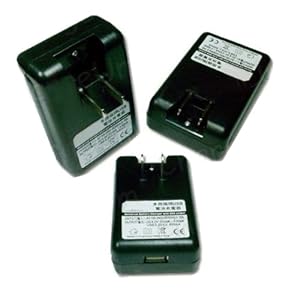
                  I bought an external battery charger for a co workers phone because the
                  charge port is defective, I can't see that well to repair it and a new main
                  board is out of the price range. It's a Samsung Galaxy II. He's getting
                  another battery so he can charge both at the same time. I don't know
                  if this would be helpful or not in your situation.
                  Comment

                  • #24
                    d4v0s
                    Senior Member
                    • Aug 2010
                    • 1661

                    The86d,

                    Lithium ion, polymer, iron, magnese, etc... Do not wear down from being depleted like nimh batteries do.

                    Lithium batteries are worn down from a large amperage draw sustained for more than a few seconds.

                    A lithium battery pulling beyond its capacity will be worn down very quickly. Usually measured in C. Which means a 2000mah battery providing 4 amps would be 2C, 2amps would be 1C so on and so forth.

                    Bad lithium batteries is always a symptom of bad charge controllers, don't leave your phone on the charger once it hits 100%, and drain it fully each time and you will get many years out of that battery.
                    Originally posted by Franklincollector
                    It was administered with a toothpick and placed on a street taco.

                    Comment

                    • #25
                      sonofeugene
                      Veteran Member
                      • Oct 2013
                      • 4425

                      Lithium batteries, regardless of type, should not be fully discharged. Ever. The safe was is to not go below 20%.

                      For car charging, here's an excellent choice:


                      It's the only dual output car charger I've found where BOTH outputs are 2 amps. All the others have one output 2 amps and the other at about 1 amp.
                      Let us not pray to be sheltered from dangers but to be fearless when facing them. - Rabindranath Tagore

                      A mind all logic is like a knife all blade. It makes the hand bleed that uses it. - Rabindranath Tagore

                      Talent hits a target no one else can hit. Genius hits a target no one else can see. - Arthur Schopenhaur

                      Comment

                      • #26
                        the86d
                        Calguns Addict
                        • Jul 2011
                        • 9587

                        Originally posted by d4v0s
                        The86d,

                        Lithium ion, polymer, iron, magnese, etc... Do not wear down from being depleted like nimh batteries do.

                        Lithium batteries are worn down from a large amperage draw sustained for more than a few seconds.

                        A lithium battery pulling beyond its capacity will be worn down very quickly. Usually measured in C. Which means a 2000mah battery providing 4 amps would be 2C, 2amps would be 1C so on and so forth.

                        Bad lithium batteries is always a symptom of bad charge controllers, don't leave your phone on the charger once it hits 100%, and drain it fully each time and you will get many years out of that battery.
                        Uh-hmm: http://www.mpoweruk.com/lithium_failures.htm

                        Try this: https://www.google.com/#q=lithium+io...ge+overvoltage

                        Now protected Lithium Ion batteries shut themselves off at full-charge, and will not allow more charging due to a board attached to the batt (most of them these days).

                        Everyone I know that doesn't charge their phone nightly with Lithium Ion batteries usually get no more than a year of good charges on them... while those who charge them every night tend to get closer to 2 years of good charges.
                        (By good charges I mean lasts at least most of the day+ with moderate use. I have proven this in testing, while coworkers all had to replace LiIon batts after the 1st year.)

                        The warning to unplug your phone is a way to try to save energy, but the phone or the batt know when to stop charging, and do, or we would have more exploding batts than we currently hear about.
                        Last edited by the86d; 12-19-2013, 8:58 AM.

                        Comment

                        • #27
                          d4v0s
                          Senior Member
                          • Aug 2010
                          • 1661

                          No device today will allow under voltage.

                          I am completely aware that dropping an individual cell below 2
                          .75 volts can cause it to explode...

                          But what you don't know sally, is you can slow bump a lipo up using its nominal voltage at .1 amp and continue to use it.

                          We do it all the time, the trick is using a nimh charger instead of a lipo charger..

                          But wait... I forgot first hand experience isn't worth anything on the internet. Jesus christ people get a life
                          Originally posted by Franklincollector
                          It was administered with a toothpick and placed on a street taco.

                          Comment

                          • #28
                            bombadillo
                            I need a LIFE!!
                            • Nov 2007
                            • 14810

                            Originally posted by bg
                            I bought an external battery charger for a co workers phone because the
                            charge port is defective, I can't see that well to repair it and a new main
                            board is out of the price range. It's a Samsung Galaxy II. He's getting
                            another battery so he can charge both at the same time. I don't know
                            if this would be helpful or not in your situation.

                            I actually tried this and it didn't work for me. I bought 2 batteries, had my oem battery, and BOTH chargers died in the first week. I am sending them back as we speak, and went on amazon and bought an HTC EVO 4G LTE instead. It was only $100 bucks and will hold me over till I get my Note 3.

                            Comment

                            • #29
                              BakoJ
                              top poster @ utahguns.net
                              CGN Contributor - Lifetime
                              • Dec 2012
                              • 2293

                              I have to use a 2.0A charger for my Note 2 or it won't charge.

                              Watch out for those 2a chargers on Amazon. They are almost all fake.
                              sigpic
                              Join the discussion at www.utahguns.net

                              Originally posted by HP911
                              sweet jesus, the subject matter experts are 97!
                              Isaiah 41:10
                              So do not fear, for I am with you;
                              do not be dismayed, for I am your God.
                              I will strengthen you and help you;
                              I will uphold you with my righteous right hand.

                              Comment

                              • #30
                                the86d
                                Calguns Addict
                                • Jul 2011
                                • 9587

                                Originally posted by d4v0s
                                No device today will allow under voltage.

                                I am completely aware that dropping an individual cell below 2
                                .75 volts can cause it to explode...

                                But what you don't know sally, is you can slow bump a lipo up using its nominal voltage at .1 amp and continue to use it.

                                We do it all the time, the trick is using a nimh charger instead of a lipo charger..

                                But wait... I forgot first hand experience isn't worth anything on the internet. Jesus christ people get a life
                                Try it and you will see that I am right, compared to this trick, even with Lithium Polymer it seems.

                                I just found this, and it seems to back me up:

                                Manufacturers take a conservative approach and specify the life of Li-ion in most consumer products as being between 300 and 500 discharge/charge cycles.…


                                And another:
                                Dive into cutting-edge tech, reviews and the latest trends with the expert team at Gizmodo. Your ultimate source for all things tech.

                                This basically restates what I stated.
                                Don't let your battery go dead or all the way down before charging [aka low-voltage cutoff]. Cell phone batteries prefer charges after only part of the battery life has been drained.

                                Yet again:
                                stub Spending money on batteries never feels good. Never. What feels worse, though, is the feeling of dread that builds up as a battery's usable life decays to a mere ten, maybe twenty minutes of on-time; this inevitably results in one of two outcomes: A replacement (battery or laptop) is purchased, or the system turns into a smaller version of a desktop (granted, desktops can now be built in sizes that compete with laptops). At upwards of $100 a pop, replacing laptop batteries every year or two is often tough to justify, especially in cheaper laptops -- luckily, though, a few tricks can be employed to extend the usable life of a laptop's Lithium-Ion battery. After our Gaming Laptop Buyer's Guide was published last week, it seemed fitting to follow-up with a post that explains how to take care of Lithium-Ion laptop batteries and make them last longer.   Charge Cycles & Depth of Charge Lithium-Ion batteries - like those used in laptops and cell phones - are limited in their lifespan for a number of reasons, some of which are more controllable than others. Storage temperature, operating temperature, trickle charge, depth of charge, and charge cycles are just part of what determines a Li-Ion battery's life. There's a lot of hearsay about battery extension techniques, but many of these are myths embedded in the prevalence of now-obsolete Nickel-Cadmium batteries (which have since been replaced by Li-Ion and Li-Po batteries). Nickel-Cadmium batteries were known for their memory retention, but unlike the old models, modern batteries no longer have memory retention and will not "forget" what their full charge capacity is. With that said, certain laptop manufacturers have suggested that discharging laptops fully at regular intervals is "good" for the battery life of the laptop. Chemically speaking, this is mostly wrong, but has some merit on a software/firmware level: The battery itself will not directly benefit from a 100% discharge/recharge cycle (the opposite, in fact), the calibration system, however - which serves as the battery's life meter - will more accurately predict remaining battery life as a result. This will not increase the life of the battery, but will allow you (as a user) to have a better gauge of the remaining on-time. All Li-Ion batteries have a limited number of charge cycles and will decay with each progressive cycle; several laptop and battery manufacturers have indicated that their batteries will permit anywhere from 300-500 full discharge/recharge cycles before the battery reaches the end of its usable life. The depth of a discharge (DoD) will largely impact the decay of a battery's life, though, and smaller discharges are less abusive to a batter than large, 100% discharges. Cadex Electronics conducted research to determine remaining capacity after 250 charge cycles; the average remaining capacity was 73%-84%. BatteryUniversity - a website dedicated to enterprise and consumer battery discussion topics - has conducted several in-depth tests concerning Li-Ion batteries (the ones referenced herein can be found in this study); one such test was of the depth of discharge of batteries and the impact on the longevity of the battery's life. The linked test reached the conclusion that "a partial discharge reduces stress and prolongs battery life. Elevated temperature and high currents also affect cycle life." You can view their chart here: Depth of discharge Discharge cycles Table 2: Cycle life as a function of depth of discharge A partial discharge reduces stress and prolongs battery life. Elevated temperature and high currents also affect cycle life. 100% DoD 50% DoD 25% DoD 10% DoD 300 – 500 1,200 – 1,500 2,000 – 2,500 3,750 – 4,700   It is worth mention that any references to a "0%" discharge are based off OS readings and battery life meters, not off of the actual state-of-charge of the battery; a true "0%" charge could be hazardous and result in a fire, and as such, smart batteries (making use of Battery Management Systems) will artificially pad the reading that users see. In actuality, a battery may still have 20% of its life left when it reads out as 0%, but draining a battery below 2.5V is dangerous, and so they often don't permit it in consumer-grade environments. A slow trickle-charge to a battery already at maximum capacity can also harm its total lifespan, though, and so leaving a system constantly plugged in is inadvisable; the increased heat produced by the charging unit will damage the battery, as will unnecessary charging. Some laptops will intelligently disable charging once the battery has reached full capacity and will only resume charging once drained to a predefined level. Battery Management Systems and Health Gauges Rechargeable Li-Ion batteries often feature Battery Management Systems (BMS), which will help regulate the health of a battery and keep it safe. As Li-Ion batteries are highly-volatile and prone to fires when under- or over-charged, the development of BMS and other intelligent microprocessing chips prevent unstable states of charge. A BMS will keep the battery within the realm of safe operation, attempting to prevent over-voltage, over-charge, excessive heat or cold damage, or other detrimental states. That's not an excuse to treat a battery poorly, though. Get the most out of your battery: How To Prolong Battery Life It may seem that everything is bad for Lithium-Ion batteries - which is, sadly, partially true - but there are things that are less bad than others when taking longevity into account. The phrase "extend your battery life" isn't necessarily the best, as the battery will always have an inevitable point-of-failure and very little can be done on that front, but it's still good practice to attempt to get the most out of a battery. The fact is that all of these tips are more on the preventative front, for while it's hard to truly extend a battery's life beyond MTBF, it is very possible to significantly decrease a battery's usable life. - When storing batteries for long periods of time without use, unplug the device and leave the battery with a 40-70% charge. Store the battery in a cool and dry environment - like the coolest part of the house. Don't leave the device plugged in for weeks or months on end without use - this will destroy the battery's ability to retain a charge. If the battery's natural discharge depletes it below usable levels (i.e. below 2.5V), its smart system will disable the battery's ability to retain a charge, as charging it from a true-0 state could result in a fire. This is also true for overuse and abuse of a battery. - Don't fully discharge the laptop too often. Try to keep it within the 20%-80% range of life. Opt for small depth of charge when possible; 10% charges are less abusive to the battery than, for example, full 100% charges. This is for numerous reasons, one of which is the heat produced by longer charge sessions. - Keep the laptop away from adiabatic walls -- any surface which completely restricts heat exhaust or cooling intake will damage a mobile device in multiple ways, one of which is the battery's life. As stated in this study, "heat shortens battery life by a factor of two for every 10°C increase above 25–30°C (18°F above 77–86°F)." The internal components of mobile devices will get hot enough without your assistance. Do your best to keep them on surfaces that allow airflow. - Your battery will not retain a memory. It will not "forget" that it can charge a full 100%; with that said, keeping your battery's gauges calibrated will help you understand when your battery will die. It's very difficulty to predict a battery's remaining life when in use, so to achieve best results, it is advisable to perform a complete charge/discharge cycle once every few months. This will help the battery's read-out to be more accurate. - More abusive sessions of use will be more damaging to the battery's prolonged usability; keep this in mind when gaming intensively on mobile batteries or otherwise rapidly depleting them. Have any questions about your batteries or myths you've heard? Ask away and we'll get them answered. - Steve "Lelldorianx" Burke.


                                And again:


                                Many have charts with pretty-colors... like your books with pretty-pictures have, to keep your attention, of course.
                                Last edited by the86d; 12-19-2013, 4:11 PM.

                                Comment

                                Working...
                                UA-8071174-1