Unconfigured Ad Widget

Collapse

Help with New Camera

Collapse
X
 
  • Time
  • Show
Clear All
new posts
  • #16
    ocabj
    Calguns Addict
    • Oct 2005
    • 7924

    Originally posted by migueloo
    how about something in between an slr and a point and shoot?


    btw...kit lenses suck balls...lol
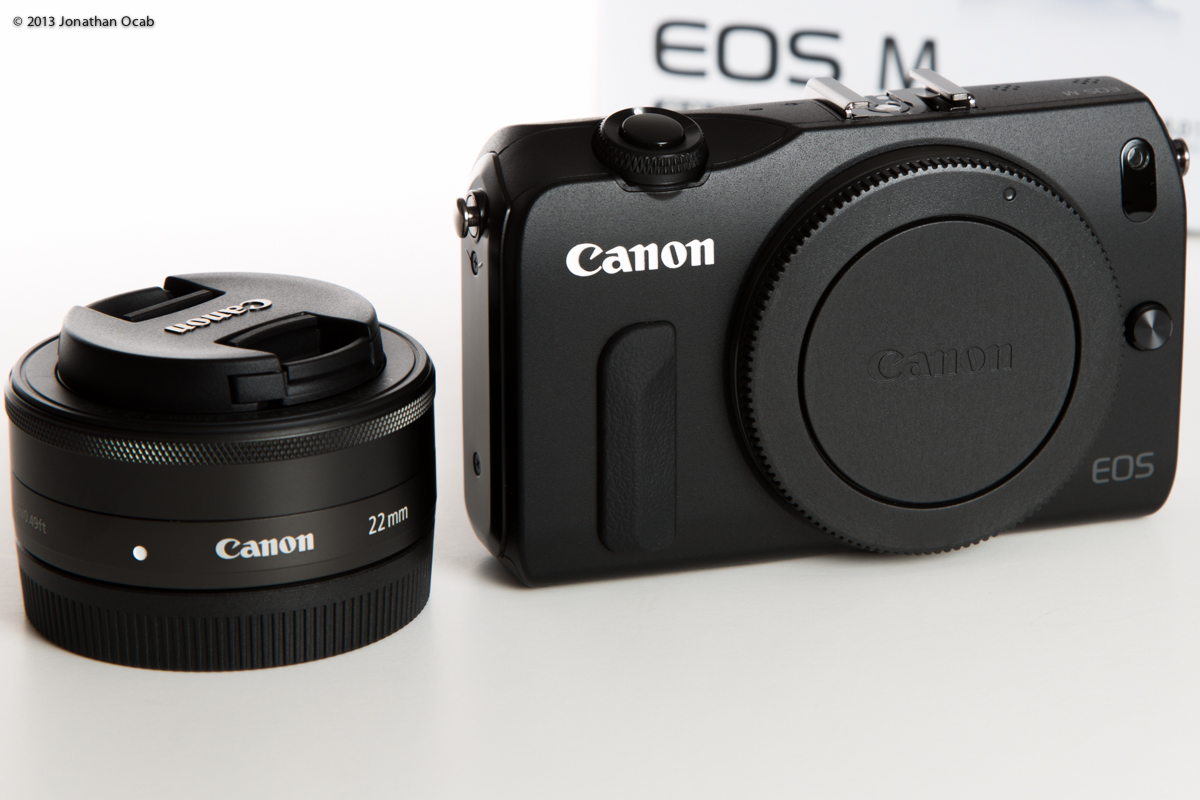
    I actually bought an EOS M a few weeks ago. I have a write-up on it:

    Mirrorless Cameras and Mirrorless Interchangeable Lens Cameras (often referred to as MLCs and MILCs, respectively) are becoming very popular amongst photographers. The recent round of MLCs/MILCs of…


    I wouldn't recommend it as a primary camera.

    Distinguished Rifleman #1924
    NRA Certified Instructor (Rifle and Metallic Cartridge Reloading) and RSO
    NRL22 Match Director at WEGC

    https://www.ocabj.net

    Comment

    • #17
      balmo
      Senior Member
      • Nov 2012
      • 1684

      Mirrorless is a great compromise between photo quality and weight, but would recommend Sony NEX system over Canon M.

      If going the canon route, I suggest getting EF-S 15-85mm f/3.5-5.6 IS USM. Its like getting a 24-105mm on a full crop body. It may not have a red ring on it, but photo quality is comparable.

      Originally posted by migueloo
      how about something in between an slr and a point and shoot?


      btw...kit lenses suck balls...lol

      Comment

      • #18
        joefrank64k
        @ the Dark End of the Bar
        CGN Contributor - Lifetime
        • Mar 2009
        • 10124

        Haha...I hope I can stay clear of any incoming flames!

        I have totally given up on big, bulky dSLR's and have gone over completely to what is referred to as 'mirrorless'..specifically the micro 4/3 (MFT) system from Olympus.

        The model I got is the OM-D EM-5 (say that 5 times fast!)...what a revelation! Small, light, outstanding image quality, beautifully made lenses. I can easily fit the camera, three lenses, and flash in a small messenger bag, and the whole bag only weighs a couple of pounds.

        And I will NEVER have a camera without an Electronic View Finder again.

        There are other great mirrorless cameras from Sony (NEX), Samsung (NX), Panasonic, and Fuji (X). Lots of sites devoted to these cameras now, and more and more pros are jumping ship. Here's the latest to do so: http://www.stuckincustoms.com/2013/0...view-nikon-vs/

        Point is: I was all set to get the latest dSLR from the 'big two'...until I picked-up the Olympus EM-5.
        You don't need a big camera, with an outdated mirror flopping around taking up unneeded space, to take stunning pictures.
        That's the past...there's a reason the E-M5 won dpreview's Camera of the Year award. Mirrorless is where it's at!

        Happy shopping!!!


        byThom sans Mirror covers mirrorless cameras, such as the Canon EOS M, EOS R, Olympus and Panasonic m4/3, Sony E and FE, and Nikon Z products


        You will never, in your life, have a chance like this again.
        If I were you, I would not pass this up. I would not let this go by...this is rare.
        Come on...what harm??

        joefrank64k 251/251 100% iTrader?

        Comment

        • #19
          Bobby Ricigliano
          Mit Gott und Mauser
          CGN Contributor
          • Feb 2011
          • 17439

          I am still using this fancy model called the Kah-merah Fohn. I think it might be Swedish.

          Comment

          • #20
            ocabj
            Calguns Addict
            • Oct 2005
            • 7924

            Originally posted by joefrank64k
            Haha...I hope I can stay clear of any incoming flames!

            I have totally given up on big, bulky dSLR's and have gone over completely to what is referred to as 'mirrorless'..specifically the micro 4/3 (MFT) system from Olympus.

            The model I got is the OM-D EM-5 (say that 5 times fast!)...what a revelation! Small, light, outstanding image quality, beautifully made lenses. I can easily fit the camera, three lenses, and flash in a small messenger bag, and the whole bag only weighs a couple of pounds.

            And I will NEVER have a camera without an Electronic View Finder again.

            There are other great mirrorless cameras from Sony (NEX), Samsung (NX), Panasonic, and Fuji (X). Lots of sites devoted to these cameras now, and more and more pros are jumping ship. Here's the latest to do so: http://www.stuckincustoms.com/2013/0...view-nikon-vs/

            Point is: I was all set to get the latest dSLR from the 'big two'...until I picked-up the Olympus EM-5.
            You don't need a big camera, with an outdated mirror flopping around taking up unneeded space, to take stunning pictures.
            That's the past...there's a reason the E-M5 won dpreview's Camera of the Year award. Mirrorless is where it's at!
            As much as I really want an EM-5, I really can't justify spending $2K+ for the body and the two lenses I want (17mm f/1.8 and 75mm f/1.8).

            As far as dumping my existing dSLR system for MFT, there's no way I can fully switch from full frame dSLR (Canon 5D Mark III) to MFT. For the kind of photography I do, I need the pixel quality I'm getting with full frame.

            I think MFT is great and what Olympus has done with the EM-5 is great. If money weren't an option, I'd be all over the EM-5 right now with a ton of primes, and I'd dump by Canon 5D Mark III and replace that with a medium format Hasselblad. That way I'd have a great portable system for travel (MFT), and a high quality system for portraits (medium format).

            The reason why the pros (e.g. TWIP podcast) are using mirrorless more heavily is because 1) they travel a lot and 2) they haven't truly 'switched' over. They use mirrorless for general stuff, but for actual paid work, they use medium format, full frame dSLR, or whatever their client requests (and they can bill for).

            There's one pro that I follow who claims to have completely switched over (Scott Bourne, photofocus.com) and he even says the MFT (EM-5) has lots of limitations (low light performance just isn't that great), but since he's 'retired', he doesn't need to rely on his Nikon D3/D4 bodies anymore.
            Last edited by ocabj; 08-13-2013, 5:51 PM.

            Distinguished Rifleman #1924
            NRA Certified Instructor (Rifle and Metallic Cartridge Reloading) and RSO
            NRL22 Match Director at WEGC

            https://www.ocabj.net

            Comment

            • #21
              CrippledPidgeon
              Senior Member
              • Sep 2007
              • 1765

              As with firearms, one of the big things to consider is weight. Now matter how good the camera is, if the photographer can't hold the camera stable long enough to take the shot, then it's pretty pointless.

              Like Ford and Chevy, as long as you go with Nikon or Canon, you pretty much can't go wrong. Sony makes good cameras too, but it's not as well supported in the aftermarket. And pretty much anything that Canon makes, Nikon and Sony make as well, so it pretty much comes down to ergonomics, the couple features that differentiate the different models, and of course price.

              So yea, best thing is to go to a big camera store, and have her handle all the different models. I'd definitely try to find a store that specializes in cameras, because you'll likely get better advice than from a big box like Best Buy (think of it like asking an employee at Big 5 about guns...). But just like guns, everyone is different, and it's usually better to buy your first camera based on ergonomics than be really picky about features.

              The entry level models (ie: Canon Rebel series) tend to be smaller and lighter than mid and pro levels because they use more plastics in the construction, and are intended for people who want something more than a point and shoot, but not take as much space. An additional plus about entry level DSLRs is that many have flip-style screens, so if you need to hold the camera over your head to get a shot, you can turn on live-view, and angle the screen so you can see it while keeping the camera pointed at your subject.

              If your wife is interested in nature photography, she's going to want a good long zoom lens. I'm using a 24-105mm on an APS-C body (7D), which gives me 168mm equivalent, and that's still on the short end. Your wife is going to want something like a 70-300mm to get in really close, and those are never kit lenses. Kit lenses are really intended to be jack-of-all trades lenses, so will be functional for everything from landscape photography (where wide lenses are generally preferred) to portrait (where you generally want 50mm or longer) to basic sports or wildlife photography (70-100mm is the low end of telephoto). Just remember that good lenses are like good glass for rifles. You're going to spend a significant amount of money on a good lens, but they're going to be sealed against weather and dust, likely have better image stabilization, and will have less distortion around the edges.

              It's almost always better to spend the money on good glass than on the best camera money can buy. True, a good camera will make better use of the quality of the glass, but most cameras will go obsolete faster than the lens. That's why when I bought my 7D, I just bought the body and put the money I saved into a better lens that I know I can move to a better body when I feel the need to upgrade.
              Last edited by CrippledPidgeon; 08-14-2013, 6:23 AM.

              Comment

              Working...
              UA-8071174-1