Unconfigured Ad Widget

Collapse

Laser trainer targets

Collapse
X
 
  • Time
  • Show
Clear All
new posts
  • CandG
    Spent $299 for this text!
    CGN Contributor - Lifetime
    • Apr 2014
    • 16970

    Laser trainer targets

    Does anyone have any experience with these? It's kind of a large investment so I was hoping to hear some feedback and recommendations from anyone who has experience with them.

    Ultimately, I want to do more dry-fire practice at home, and this seems like a good solution to get some marksmanship practice at home (if it works).

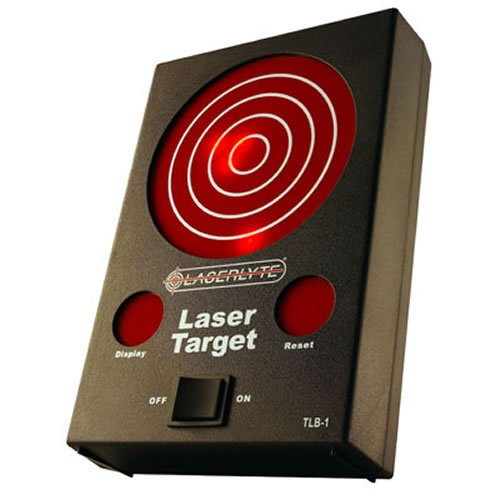
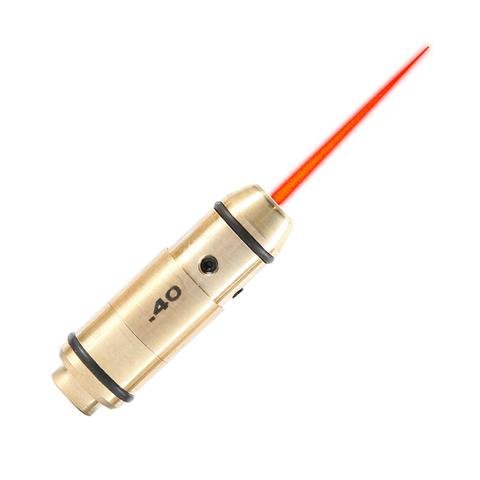
    The one I was looking at was the LaserLyte one for about $190 (plus laser cartridges at around $100/caliber each). To get the whole setup for my CCW-listed weapons is about a $500 investment so I really don't want to spend that kind of dough it it isn't going to do what I want it to do. Any input, or different product suggestions, would be greatly appreciated!

    Settle down, folks. The new "ghost gun" regulations probably don't do what you think they do.


  • #2
    bigbearbear
    Calguns Addict
    • Jun 2011
    • 5378

    I had one, lend it to a fellow Calguns member who is also a colleague. Pretty nice to have for trigger control practice, works especially well if you have a DA/SA type pistol like a Beretta Px4 because you won't have to rack the slide after you have pulled the trigger.

    Put a little grease on the "bullet" so that it can be removed easily, and use something wooden so that you don't crack the front focusing lens for the laser. I use a small chopstick to get it out after practice.

    Comment

    • #3
      SomeGuy75
      Senior Member
      • Jun 2015
      • 1405

      Tagged.

      I've been looking into these too. I have read there is a way you can use CO2 powered airsoft guns with a laser to have rapid fire and some mild recoil.
      Also, consider buying on Amazon, they have a decent return policy.
      Last edited by SomeGuy75; 07-14-2017, 8:31 PM.

      Comment

      • #4
        smashycrashy
        Veteran Member
        • Sep 2011
        • 2999

        I have the cool fire trainer for my G17 and a few different laser targets. It's nice to be able to train at home. I went for the cool fire so I could train more realistically than the laser in the OP.

        Comment

        • #5
          beanz2
          I need a LIFE!!
          • Nov 2008
          • 12035

          I've been using those for practice when a course is coming up. I use both LaserLyte's barrel insert (that detects the sound of the hammer hitting the snap cap) and Laser Ammo's 9mm cartridge (which is activated by a switch that the firing pin hits). I have much more practice with Laser Ammo's cartridge than Laserlyte's insert.


          The disadvantage of the barrel insert is that it sticks out the front of the gun by about 1/4" making the gun not fit into my holster. This affected the draw somewhat because the gun sits higher in the holster and the usual tactile click from the holster's retention is lost when using the insert:


          The disadvantage of the laser cartridge is that the switch, although protected under thick rubber in the back of the cartridge, eventually wears out. Not sure about LaserLyte's, but Laser Ammo sells replacement switches:


          With either type, the issue is trigger reset. I only practice on a DA/SA CZ, but I figure if you have a DAO gun, they would work great. In a DA/SA, you don't get to practice your SA shots unless you cycle the slide between shots or manually cock the hammer. Not sure how this would play out on a striker fired gun, I suppose you have to cycle the slide all the time also.

          I have a simpler version of Laserlyte's laser target. The reaction time mode is fun since the machine signals when to draw. The plinking can kit is fun with friends and kids, but too unwieldy for practice as you have to set them back up after you hit them.

          Though I also bought a .223 cartridge, the utility is pretty low when it comes to rifles since the laser splash is tiny at rifle distances, but you do need a large yard to do all that.
          sigpic
          The wife will be pissed, but Jesus always forgives.

          Comment

          • #6
            Montu
            Senior Member
            • May 2011
            • 1589

            Originally posted by bigbearbear
            I had one, lend it to a fellow Calguns member who is also a colleague. Pretty nice to have for trigger control practice, works especially well if you have a DA/SA type pistol like a Beretta Px4 because you won't have to rack the slide after you have pulled the trigger.

            Put a little grease on the "bullet" so that it can be removed easily, and use something wooden so that you don't crack the front focusing lens for the laser. I use a small chopstick to get it out after practice.
            Yup, it sure beats regular dry firing.

            Let me know when you want it back
            K.F.K|Μολὼν λαβέ

            Comment

            • #7
              IVC
              I need a LIFE!!
              • Jul 2010
              • 17640

              I'll go against the grain here.

              It's a bit of a long story, so let me start with the role of dry firing and what your goals are. Dry firing is essential to any action shooting training. It establishes muscle memory for everything *except* recoil recovery. As such, you would not only completely lose any benefit if you had to rack the slide between shots, but you'd be building *incorrect* muscle memory. It's equally bad with the DA/SA guns where you have double-strike capability - proper dry firing of such guns requires all but first shot *not to reset* the trigger, yet with a laser you'd be doing exactly that in order to generate the pulse.

              Arguably you can use lasers on DA-only revolvers without messing up your training (competition revolvers are almost universally converted to DA-only and, if not, they are exclusively fired in the DA mode). This is the only time where the laser wouldn't do you a disservice.

              Similarly, there are "Glock simulator devices" that look and feel like a Glock and will "fire" a pulse with each trigger pull. Those won't hurt your training either, but they are expensive and highly specific.

              Now, the last two examples are only where it *doesn't hurt* your training. The real question is what benefit, if any, lasers provide. The answer is "very little."

              The visual reference the laser dot provides on the plain target is the same as the visual reference your sights provide (it's called "calling the shot" if you can see the moment when the front sight starts moving under recoil). Seeing a dot instead of the sight only makes you look at the wrong place (and focus your eyes at the incorrect distance). So, using non-electronic targets is actually bad (again).

              If you use electronic target that will tell you the location of the shot, you actually CAN benefit under some very limited circumstances. First, if you are doing "precision shooting," you will watch your sights move as you pull the trigger. If they move, you have to work on it. Once they don't move, you can call your shot without the laser anyway. So, precision shooting is out. What's left would be, e.g,. working on the fast draw and using laser target to *confirm* that the shot you called (where you believe the sights were as the trigger went "click") is really where the sights were. However, there is a caveat again - calling the shots is something you have to *confirm* in live fire and one of the few skills that requires live fire.

              To summarize, your dry fire practice is something that 95%+ doesn't have a use for lasers. You can get a limited benefit on some specific drills, but that's about it.

              If you use a dedicated "simulator gun" with multiple electronic targets, you can benefit from fine tuning your "shot calling" by confirming it with the device that you are seeing what you need to see. This would be the only setup I would realistically consider. Just remember that the training benefit here is not to get a score, improve accuracy or see how well you're doing, but to fine-tune your ability to call your shots - you want to confirm that where you "saw" your sights is where the shot was recorded.
              sigpicNRA Benefactor Member

              Comment

              • #8
                IVC
                I need a LIFE!!
                • Jul 2010
                • 17640

                A quick add-on about "calling shots" with laser targets.

                Say, you're working on the draw. You get the gun out of the holster, point at the target, pull the trigger and hit the "A" zone (laser target records it). You keep on doing this and you get really good at it. You whip it out, pull the trigger and there it is - an "A" hit.

                Is this good practice? Not necessarily! That's the trick.

                If you don't use this practice to work on your *shot calling,* you are building muscle memory for point shooting. That's very bad and will hurt you on follow up shots and transitions. You will have to unlearn it, then learn how to use the sights for calling the shots. You have to be very careful about what you're practicing.
                sigpicNRA Benefactor Member

                Comment

                • #9
                  FresnoRob
                  Senior Member
                  • May 2013
                  • 2133

                  I went a cheaper route. You need something like a tripod for your phone.

                  Comment

                  • #10
                    Mayor McRifle
                    Calguns Addict
                    • Dec 2013
                    • 7799

                    SIRT: https://nextleveltraining.com/produc...ning-pistol-2/
                    Anchors Aweigh

                    sigpic

                    Comment

                    • #11
                      Turbinator
                      Administrator
                      CGN Contributor - Lifetime
                      • Oct 2005
                      • 11993

                      Originally posted by IVC
                      It's a bit of a long story, so let me start with the role of dry firing and what your goals are. Dry firing is essential to any action shooting training. It establishes muscle memory for everything *except* recoil recovery. As such, you would not only completely lose any benefit if you had to rack the slide between shots, but you'd be building *incorrect* muscle memory. It's equally bad with the DA/SA guns where you have double-strike capability - proper dry firing of such guns requires all but first shot *not to reset* the trigger, yet with a laser you'd be doing exactly that in order to generate the pulse.
                      I read your two posts with great interest, since dry fire practice is always pretty high on my mind, and something I do a few times a week just to keep my trigger control in tune.

                      Given that most of us don't want to (or can't) invest resources into getting something that resets a SA trigger during dry fire practice... based on your comments... most dry fire practice is actually pretty harmful then to muscle memory training?

                      After all, take a 1911 for example.. dry fire, then one has to go back and re-cock the hammer or rack the slide to get the hammer set again. There's no way to engage in a dry fire "at home" exercise without going through those physical motions.

                      So what does one do then? I can't think of any "easy to implement" solutions that would help get the benefit of dry fire, without the detriment of additional muscle memory of racking a slide or manually cocking a hammer.

                      Turby

                      Comment

                      • #12
                        beanz2
                        I need a LIFE!!
                        • Nov 2008
                        • 12035

                        Originally posted by Turbinator
                        I read your two posts with great interest, since dry fire practice is always pretty high on my mind, and something I do a few times a week just to keep my trigger control in tune.

                        Given that most of us don't want to (or can't) invest resources into getting something that resets a SA trigger during dry fire practice... based on your comments... most dry fire practice is actually pretty harmful then to muscle memory training?

                        After all, take a 1911 for example.. dry fire, then one has to go back and re-cock the hammer or rack the slide to get the hammer set again. There's no way to engage in a dry fire "at home" exercise without going through those physical motions.

                        So what does one do then? I can't think of any "easy to implement" solutions that would help get the benefit of dry fire, without the detriment of additional muscle memory of racking a slide or manually cocking a hammer.

                        Turby
                        The only thing that would be perfect is having your own range at home, preferably a 360 degree range with a shoot house with movable walls. 500 yard targets would be a plus. A healthy ammo store on the premises and an understanding Sheriff (or one who shoots with you LOL)
                        sigpic
                        The wife will be pissed, but Jesus always forgives.

                        Comment

                        • #13
                          IVC
                          I need a LIFE!!
                          • Jul 2010
                          • 17640

                          Originally posted by Turbinator
                          Given that most of us don't want to (or can't) invest resources into getting something that resets a SA trigger during dry fire practice... based on your comments... most dry fire practice is actually pretty harmful then to muscle memory training?
                          Misunderstanding - you do NOT need to reset the trigger, you are practicing the *motion* that is the same whether it's reset or not (different weight of pull, but that's unavoidable).

                          That's why with DA/SA guns you do the first DA pull (they have to be decocked in the holster, so first pull will be DA), then you release the trigger slightly, just to the point of where the SA reset would be (but not to the point of DA reset) and pull again. What you're practicing is "long heavy pull, followed by short light pull."
                          sigpicNRA Benefactor Member

                          Comment

                          • #14
                            hermosabeach
                            I need a LIFE!!
                            • Feb 2009
                            • 19902

                            Spend the money on a class.

                            Seriously


                            Ok
                            Get an old, expired bullet proof vest
                            Put a target on the vest

                            This is your dry practice target - hang it up to practice, take it down when done.

                            Get a laser. Sight your pistol in on the doornob and adjust the laser to be in line - right and left with the sights, but as low as possible below the bore.


                            Now when you dry practice, you set up your phone to video you and the target.

                            You can see during replay if the laser moves when you break the shot/ press the trigger.


                            Keeping the gun still when you break the shot is 95% of hitting a human target.


                            The laser is low so you do not see it.... you only see your iron sights.

                            The laser shows how much movement you have when you break the shot on replay.


                            The replay also shows your draw counts and where your trigger finger is at all times.... when does it enter the trigger guard.... when does it leave the trigger guard.....
                            Rule 1- ALL GUNS ARE ALWAYS LOADED

                            Rule 2 -NEVER LET THE MUZZLE COVER ANYTHING YOU ARE NOT PREPARED TO DESTROY (including your hands and legs)

                            Rule 3 -KEEP YOUR FINGER OFF THE TRIGGER UNTIL YOUR SIGHTS ARE ON THE TARGET

                            Rule 4 -BE SURE OF YOUR TARGET AND WHAT IS BEYOND IT
                            (thanks to Jeff Cooper)

                            Comment

                            • #15
                              IVC
                              I need a LIFE!!
                              • Jul 2010
                              • 17640

                              Originally posted by Turbinator
                              After all, take a 1911 for example.. dry fire, then one has to go back and re-cock the hammer or rack the slide to get the hammer set again. There's no way to engage in a dry fire "at home" exercise without going through those physical motions.
                              You pull the "dead trigger." If you recock, either manually or using the slide, you are doing it wrong.

                              Dry fire is very useful because you can practice pretty much all aspects of shooting exactly the same way you would in live fire. The only difference is that there is no "bang" at the end.

                              For example, consider working on your draw (you can do this either to "acceptable sight picture," where you don't pull the trigger, or to the "first shot," where you pull the trigger). The way you react to timer, the motion of each of your arms, the draw cycle, the lining up of the sights, visual confirmation of the sight picture and sight alignment, the grip and, finally, the trigger pull without disturbing the sights are EXACTLY the same in dry and live fire. By the time you hear "click" or "bang" it's all done and if the sights at THAT time were lined up and "undisturbed," your shot went where the sights were (let's not get into details of milliseconds it takes for the bullet to leave the barrel - virtually all inaccuracy comes from moving the sights during the trigger pull; firm grip takes care of the rest).

                              It is this characteristic of the dry fire, that it's EXACTLY the same as in live fire, that makes it such a useful training tool.

                              Look at it further, beyond the initial draw. If you want to practice, e.g., Bill Drill (draw, fire 6 shots on a single target), you do it in dry fire with first "click" and five "soggy/dead trigger pulls." However, you are working on mechanics of your trigger finger - can you pull off .2 or better splits without disturbing the sight picture while working it rapidly? If you cannot do it without recoil control, you cannot do it, full stop. Once you can do it in dry fire, you still have to work on your shot recovery in live fire, but at least you know that you have the fundamentals ready.

                              Or, consider any split-transition drill, e.g., El Presidente. As you move from target to target, can you *positively identify* the moment you pull the trigger and the location of your sights at that time? Note that you have to control not just for the disruption of the fast trigger pull, but also the motion of the transition itself. Did you overshoot? Undershoot? That's where you have to be able to "call the shot" - consciously and deliberately (and above all, *honestly*) determine where were the sights at the time of the pull.

                              The only remaining thing in live fire is to work on recoil control and recovery and *confirmation* that you call the shots correctly in dry fire. If you were sloppy or incorrect in your dry fire, you'll be surprised to learn that your live shots are not going where you think they are going. This is your cue that you're not doing dry fire correctly.

                              Finally, when you can *see* the sights start moving under recoil, you are "there." You are watching your front sight, you know where it is and you know where it was at the moment the shot was fired - that's where the bullet will hit.
                              Last edited by IVC; 07-16-2017, 11:39 AM. Reason: site vs. sight typo
                              sigpicNRA Benefactor Member

                              Comment

                              Working...
                              UA-8071174-1