

 Tweet
Tweet
I think what they are trying to do is correlate something we are more familiar with to demonstrate the energy in the bullet. Most people don't understand bullet ballistics so if you tell them a .44 magnum will send you sailing if you get shot with it; they can believe it. You tell them it has the same energy as lobbing a 3 pound fish over the counter to someone in the kitchen and all of a sudden they start to realize how foolish it was to think that little bullet could throw someone back. They weren't trying to say that it would do the same damage, but that it has the same energy.
A pound of feathers traveling at 100 mph may cut you up, but won't do much else. A half pound of steel at 50 mph could seriously **** you up. Damage and eregy are two seperate issues and they are just correlating the energy into objects and velocities we are more familiar and comfortable with.
Not to mention that the article addresses an instance where the attacker was on PCP. That's not exactly a controlled encounter that can be looked to as hard evidence to the nature of the way the human body responds to gunshot wounds. Besides, a severed lower spine will force someone to lose control and drop to the floor; it may not stop them entirely but it will drop them and I think the writer of that article knows that.
I think what he is trying to say is that you can NOT rely on anything to stop a conflict outside of absolute destruction of the nervous system, which can be done with anything, even a little 22. Then again I've talked with people who were morticians and EMT personel who would see time and time again that a .45 would cause much more fatal tissue damage than a 9mm. I've heard of people getting shot through the heart with some calibers and surviving. I've heard of people being shot in the brain and surviving, even being concious enough to take themselves to the hospital afterwards (not realizing the severity of their wound).
This article is just further demonstration that there is NO fight stopper. Period. Doesn't matter if it's a 22 or a .50 BMG. Doesn't matter if it's one or a hundred. Doesn't matter where, how big, or how fast. NOTHING will stop a fight flat out every time.
So what can we do?
We can study the human body and understand where it's most vulnerable. We can maximize our potential by careful selection and aiming of these points. We can pick a caliber that is adequate enough to penetrate to these weak and/or vulnerable points and still maintain enough energy to do significant damage. And most importantly, we can train and train some more until it becomes second nature and we fall back on it even when adrenaline, panic, terror, etc takes over.
These will NOT stop the fight; these just increase our chances of stopping the fight and that is ALL we can do.
ETA: And caliber IS important. Even a .22 can penetrate to the centeral nervous system and kill someone. Knowing that, then a .22 semi-auto with it's low recoil and small size would be the perfect carry gun. Then again, someone wearing a couple thick layers of winter clothing could become inviniclble at that point. You might have someone who is VERY fat where the bullet would stop before reaching vital organs. You might have someone in a car trying to shoot you. If everyone was the same size, we walked around naked, and crimes happened in the same place and the same manner then caliber wouldn't be that big of an issue. The problem is there are billions upon billions of variables were a larger caliber can perform where a smaller one can not.
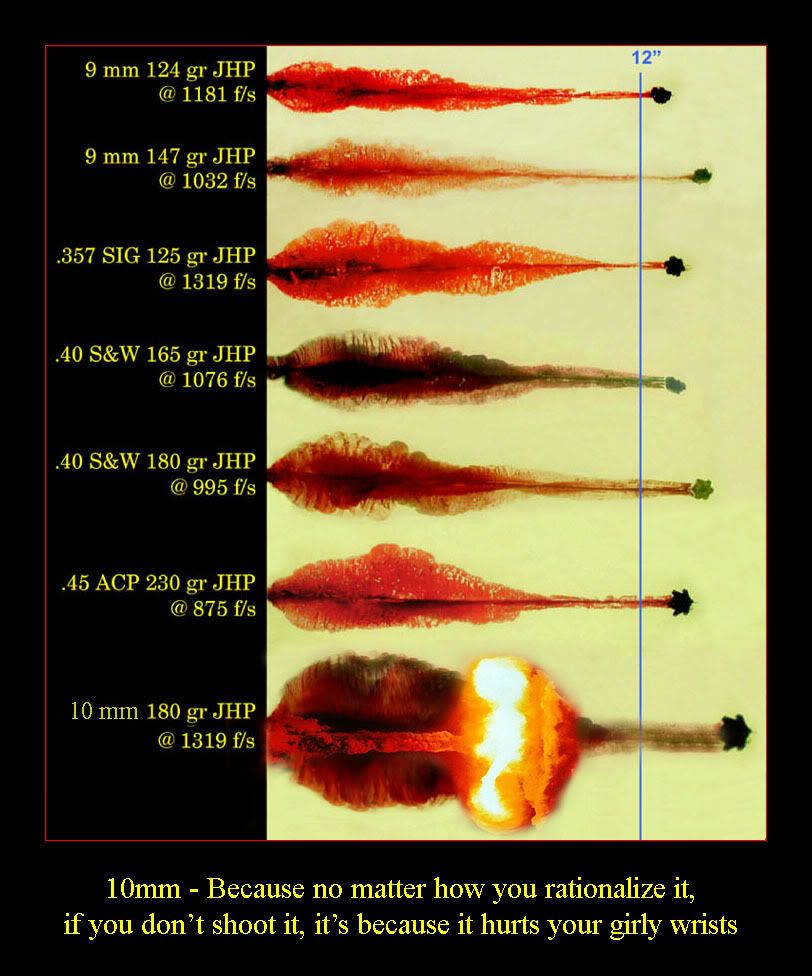
The best caliber is the most powerful caliber that you are comfortable and efficient with.
A pound of feathers traveling at 100 mph may cut you up, but won't do much else. A half pound of steel at 50 mph could seriously **** you up. Damage and eregy are two seperate issues and they are just correlating the energy into objects and velocities we are more familiar and comfortable with.
Not to mention that the article addresses an instance where the attacker was on PCP. That's not exactly a controlled encounter that can be looked to as hard evidence to the nature of the way the human body responds to gunshot wounds. Besides, a severed lower spine will force someone to lose control and drop to the floor; it may not stop them entirely but it will drop them and I think the writer of that article knows that.
I think what he is trying to say is that you can NOT rely on anything to stop a conflict outside of absolute destruction of the nervous system, which can be done with anything, even a little 22. Then again I've talked with people who were morticians and EMT personel who would see time and time again that a .45 would cause much more fatal tissue damage than a 9mm. I've heard of people getting shot through the heart with some calibers and surviving. I've heard of people being shot in the brain and surviving, even being concious enough to take themselves to the hospital afterwards (not realizing the severity of their wound).
This article is just further demonstration that there is NO fight stopper. Period. Doesn't matter if it's a 22 or a .50 BMG. Doesn't matter if it's one or a hundred. Doesn't matter where, how big, or how fast. NOTHING will stop a fight flat out every time.
So what can we do?
We can study the human body and understand where it's most vulnerable. We can maximize our potential by careful selection and aiming of these points. We can pick a caliber that is adequate enough to penetrate to these weak and/or vulnerable points and still maintain enough energy to do significant damage. And most importantly, we can train and train some more until it becomes second nature and we fall back on it even when adrenaline, panic, terror, etc takes over.
These will NOT stop the fight; these just increase our chances of stopping the fight and that is ALL we can do.
ETA: And caliber IS important. Even a .22 can penetrate to the centeral nervous system and kill someone. Knowing that, then a .22 semi-auto with it's low recoil and small size would be the perfect carry gun. Then again, someone wearing a couple thick layers of winter clothing could become inviniclble at that point. You might have someone who is VERY fat where the bullet would stop before reaching vital organs. You might have someone in a car trying to shoot you. If everyone was the same size, we walked around naked, and crimes happened in the same place and the same manner then caliber wouldn't be that big of an issue. The problem is there are billions upon billions of variables were a larger caliber can perform where a smaller one can not.
The best caliber is the most powerful caliber that you are comfortable and efficient with.




Comment