

 Tweet
Tweet
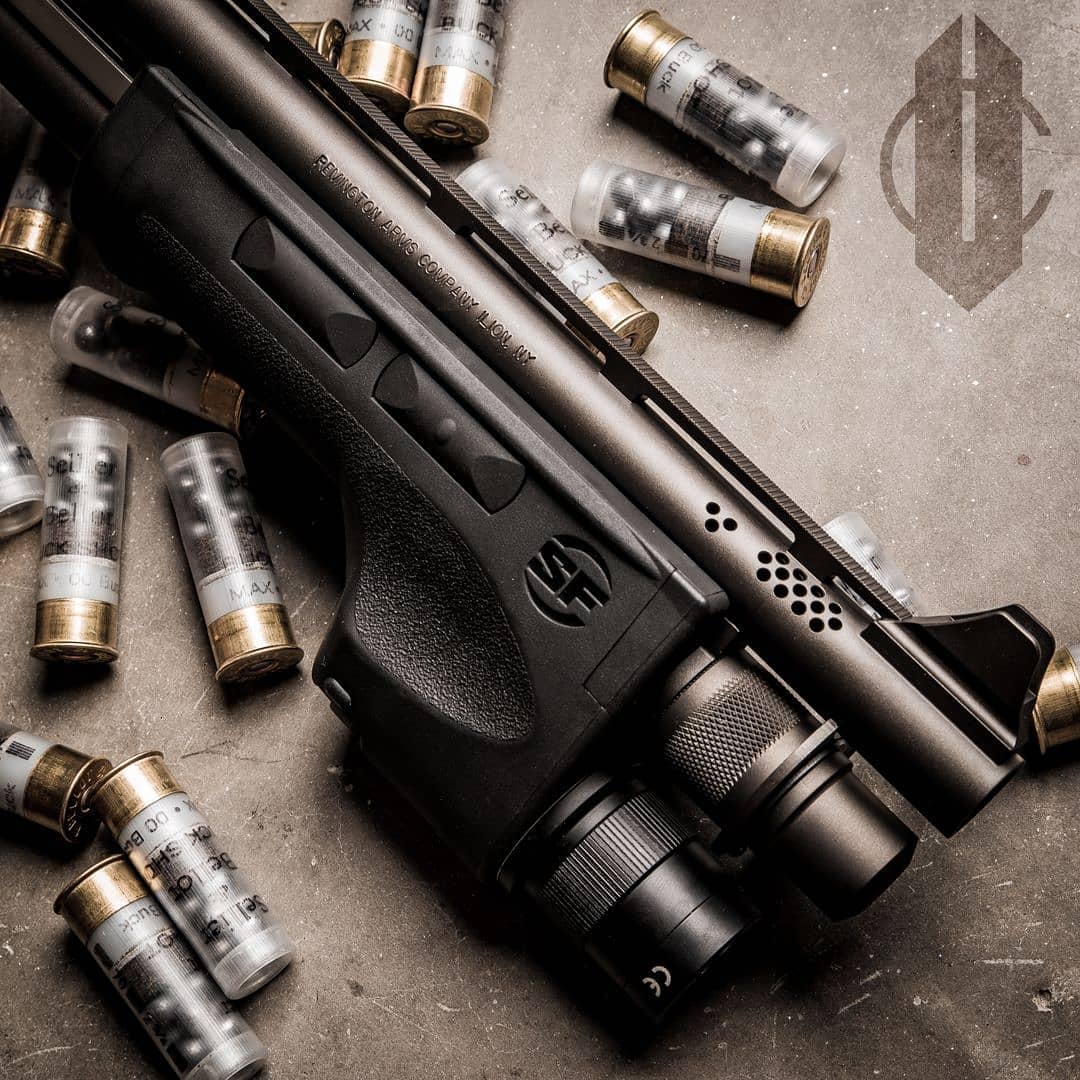
Hans Vang was a High End Shotgun Smith in Santa Barbara CA when he came up with these mods. now known as the "Vang Comp Process."
He was experimenting with different barrel mods and back boring had just came in to Vogue in Trap Shooting at the time.
He applied what they learned on the Trap Field to Remington 870 Police Shotguns and the results were very advantageous when shooting buckshot, and slugs, so a side business was born.
This Process consisted of lengthening the forcing cone to 3" which changes the Recoil Impulse to a slow push instead of an abrupt hit. Back Boring the Bore to .745 which lowers the pressure in the barrel and reduces the friction on the payload as it goes down the barrel. Then Choking the barrel back down to .730 at the muzzle. Then adding the 62 1/16" holes that constitute the porting to decrease muzzle rise which benefits follow up shots.
The porting does decrease muzzle rise. This was seen when comparing my Gray House Gun with the Vang Comped Barrel to the Monkeyberg with an un-ported barrel.
We are not talking complete elimination of Muzzle rise which is only about 3-4" to begin with un-ported to 2" with the porting. Also my A5's Buck Special Barrel got ported and that virtually eliminated the muzzle rise on that gun with no other mods to it.
The choke effect is caused by the difference in the bore diameter to the muzzle diameter. which is this case is .015 or Light Modified. This worked the same way as "Jug Choking" did on Muzzle Loading shotguns.
They had a relief cut made about 2" before the muzzle and the payload would go down the barrel at bore diameter, then expand to whatever size was built into the "Jug" and then get choked back down to bore diameter as it left the barrel. So if the "Jug" was .010 deep on a side, that would be a .020 constriction as the payload was choked back down when leaving the muzzle and result in a "Modified" Pattern.
Last week I found out that the Carlson Skeet Chokes in my Citori CXS were .725 which should be Skeet Choke or .005 constriction. However that was based on a bore diameter of .730.
My barrels are back bored to .740 which means the total constriction is actually .015 or Light Mod. So thinking I was shooting a more open choke was giving me way too many misses.
The Browning Skeet tubes are .735 at the muzzle end and based on a .740 bore dia. means a constriction of .005 or Skeet Choke. This yielded more hits yesterday. I also ran a cylinder bore choke in the lower barrel which measures .740 at the muzzle or no constriction.
Other choke tubes I have for other guns have constrictions based on the common .730 bore of a 12 ga. shotgun. or Cylinder .730, Skeet .725, IC .720, Mod.710 IM .705, Full.700.
So there is lots to know about chokes and how they work and this information is of use to anyone wanting to understand how their shotguns work.
Hopefully others will contribute their knowledge on this subject to this thread.
Randy
He was experimenting with different barrel mods and back boring had just came in to Vogue in Trap Shooting at the time.
He applied what they learned on the Trap Field to Remington 870 Police Shotguns and the results were very advantageous when shooting buckshot, and slugs, so a side business was born.
This Process consisted of lengthening the forcing cone to 3" which changes the Recoil Impulse to a slow push instead of an abrupt hit. Back Boring the Bore to .745 which lowers the pressure in the barrel and reduces the friction on the payload as it goes down the barrel. Then Choking the barrel back down to .730 at the muzzle. Then adding the 62 1/16" holes that constitute the porting to decrease muzzle rise which benefits follow up shots.
The porting does decrease muzzle rise. This was seen when comparing my Gray House Gun with the Vang Comped Barrel to the Monkeyberg with an un-ported barrel.
We are not talking complete elimination of Muzzle rise which is only about 3-4" to begin with un-ported to 2" with the porting. Also my A5's Buck Special Barrel got ported and that virtually eliminated the muzzle rise on that gun with no other mods to it.
The choke effect is caused by the difference in the bore diameter to the muzzle diameter. which is this case is .015 or Light Modified. This worked the same way as "Jug Choking" did on Muzzle Loading shotguns.
They had a relief cut made about 2" before the muzzle and the payload would go down the barrel at bore diameter, then expand to whatever size was built into the "Jug" and then get choked back down to bore diameter as it left the barrel. So if the "Jug" was .010 deep on a side, that would be a .020 constriction as the payload was choked back down when leaving the muzzle and result in a "Modified" Pattern.
Last week I found out that the Carlson Skeet Chokes in my Citori CXS were .725 which should be Skeet Choke or .005 constriction. However that was based on a bore diameter of .730.
My barrels are back bored to .740 which means the total constriction is actually .015 or Light Mod. So thinking I was shooting a more open choke was giving me way too many misses.
The Browning Skeet tubes are .735 at the muzzle end and based on a .740 bore dia. means a constriction of .005 or Skeet Choke. This yielded more hits yesterday. I also ran a cylinder bore choke in the lower barrel which measures .740 at the muzzle or no constriction.
Other choke tubes I have for other guns have constrictions based on the common .730 bore of a 12 ga. shotgun. or Cylinder .730, Skeet .725, IC .720, Mod.710 IM .705, Full.700.
So there is lots to know about chokes and how they work and this information is of use to anyone wanting to understand how their shotguns work.
Hopefully others will contribute their knowledge on this subject to this thread.
Randy





Comment