

 Tweet
Tweet
Hey guys,
I sometimes see questions on which ACOG to get. Being that I have access to the 3 most popular models, I figured I'd do a write-up and comparison with pics to help those who are trying to figure out which one to get, or which one will serve their purpose best. Who knows: Maybe this can become a sticky so that people will be able to find it in the future. Anyway, here goes the review.
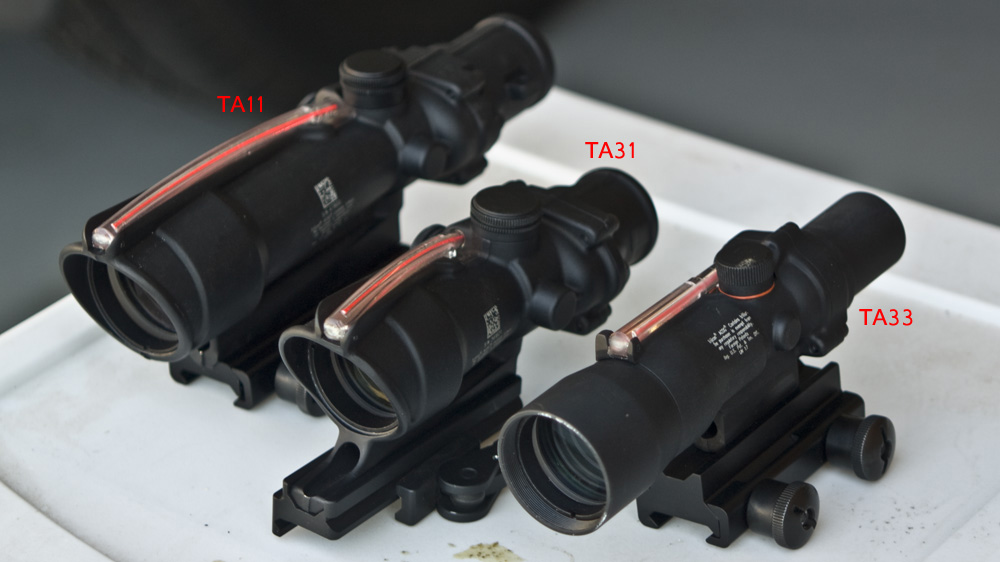
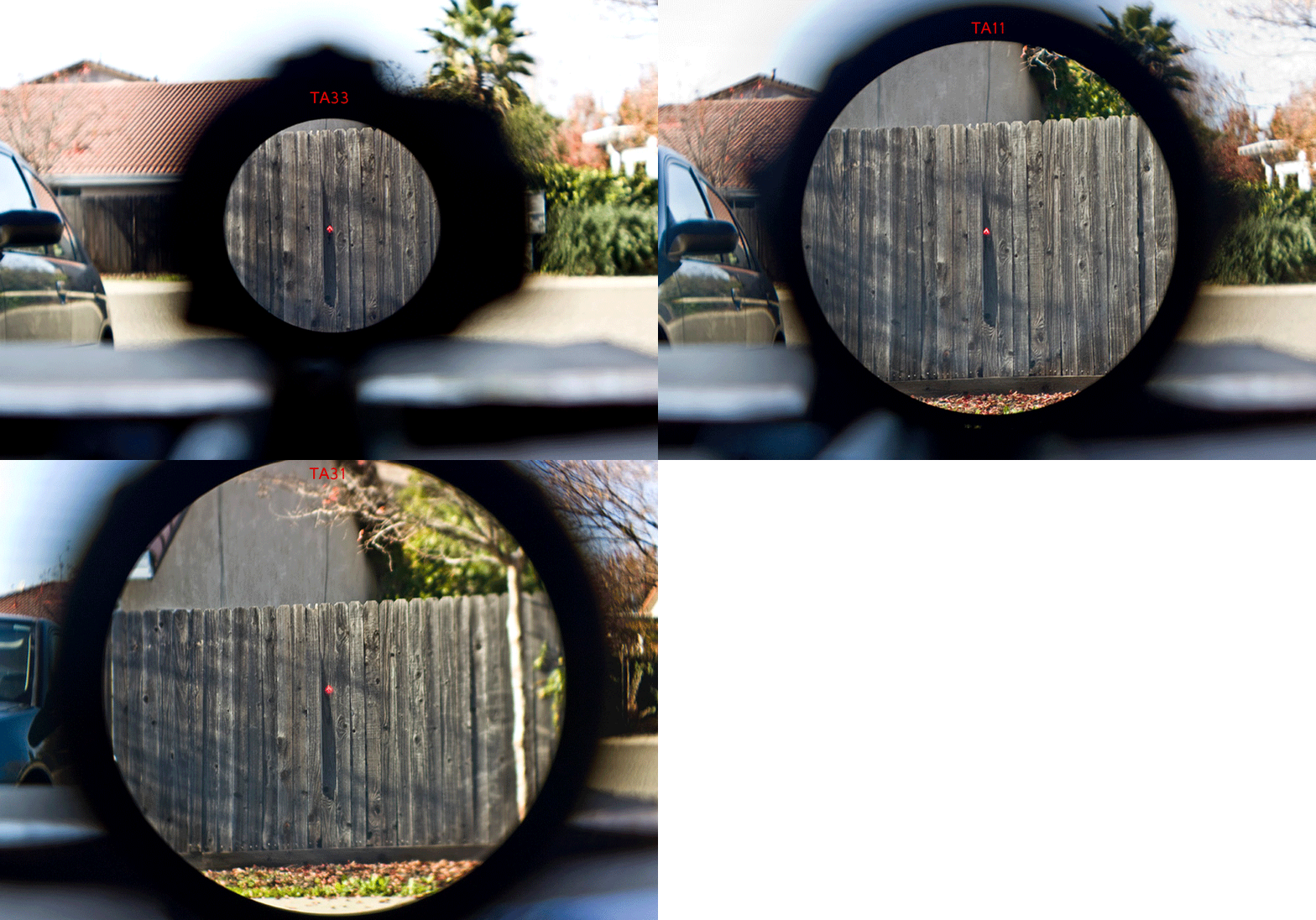
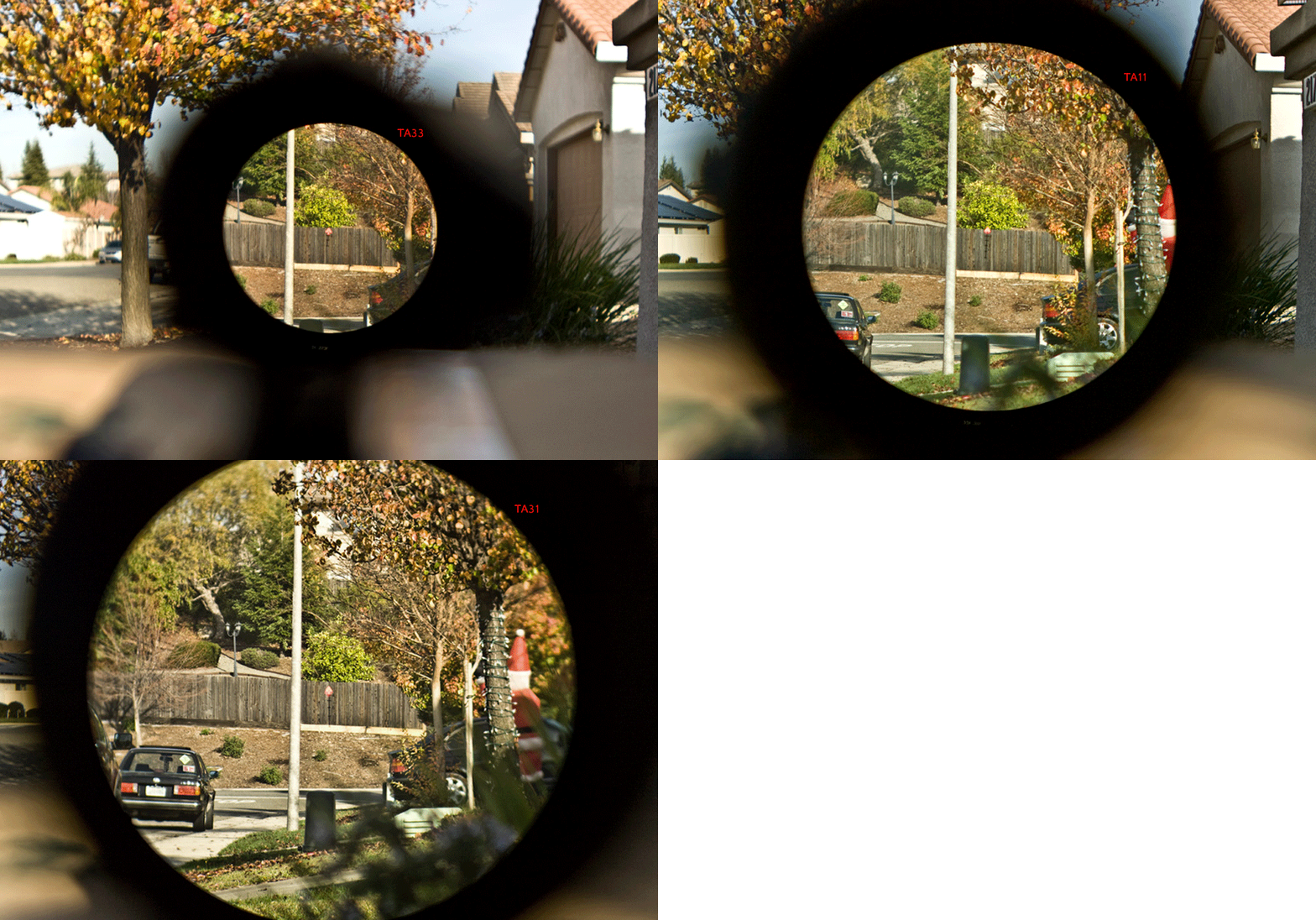
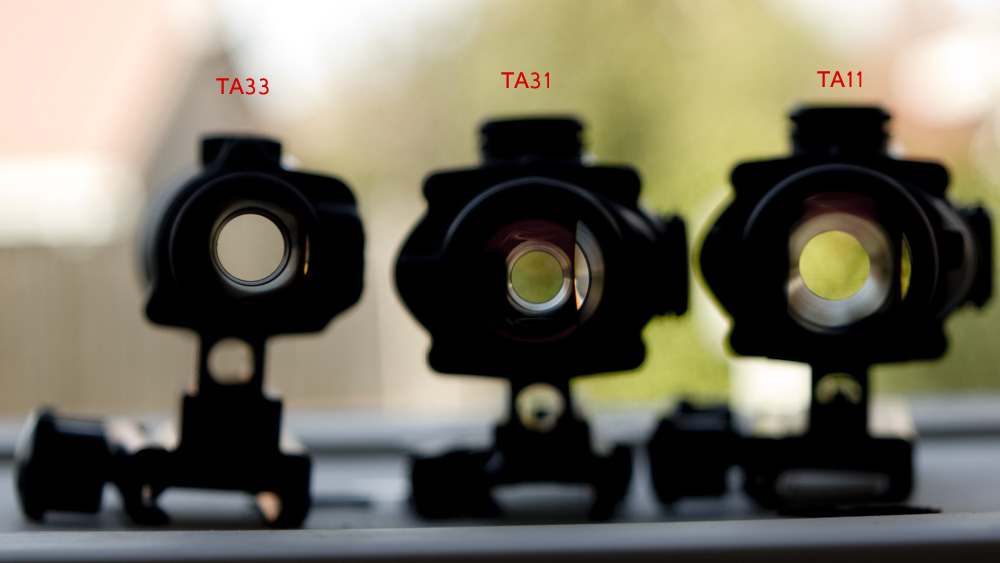
Here are the three models up for review and consideration: TA33 (3x), TA11 (3.5x) and TA31 (4x). Each, I believe, has a special niche which helps them excel in certain shooting conditions. All exhibit extremely clear, bright and crisp glass....some of the best there is. They are all extremely rugged and can take a beating.
Weight
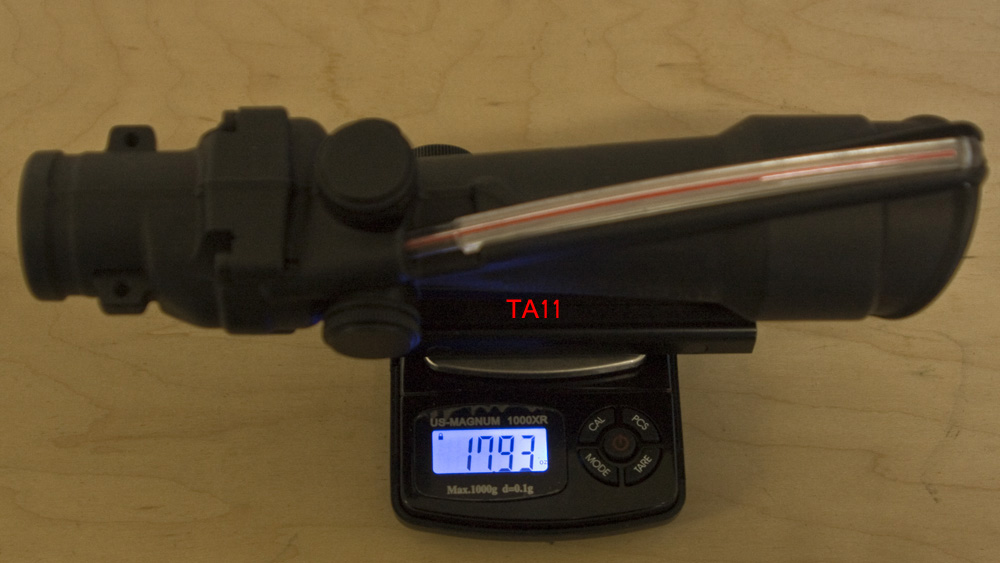
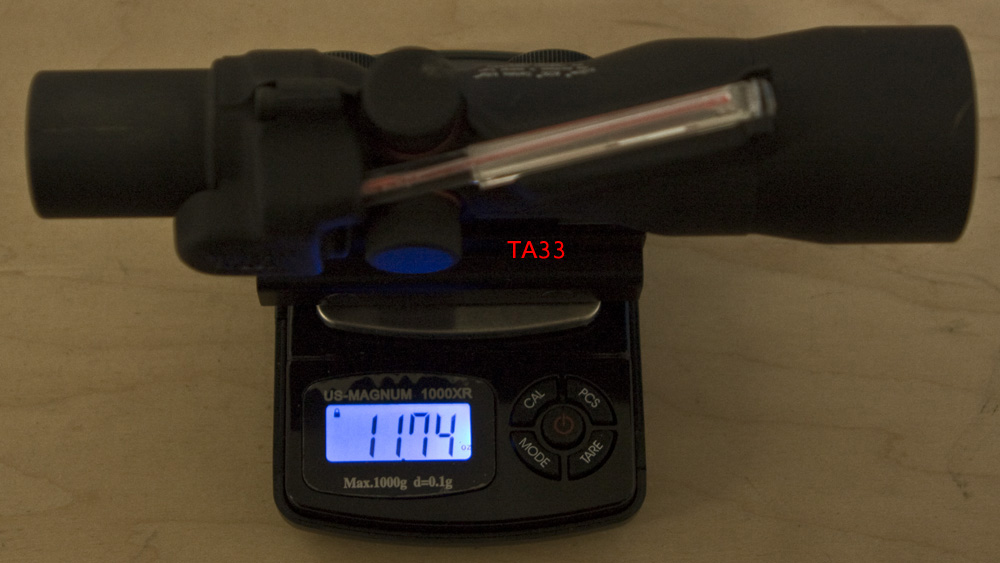
Depending on what kind of rifle you plan to put one of these scopes on, you will probably want to consider the weight of each scope. The TA11 came in at the heaviest and by far the largest/longest of the 3 at 17.93 oz. 2nd place in weight goes to the TA31, weighing 13.83 oz. The lightest of the 3 goes to the TA33, weight a scant 11.74 oz. All three weights were measured WITH the TA60 mount EXCEPT the TA31 which has an American Defense RECON single throw levered quick detach mount. It seems to be lighter than the TA60, so that helped the over all weight a little bit.....but not much.

Eye Relief
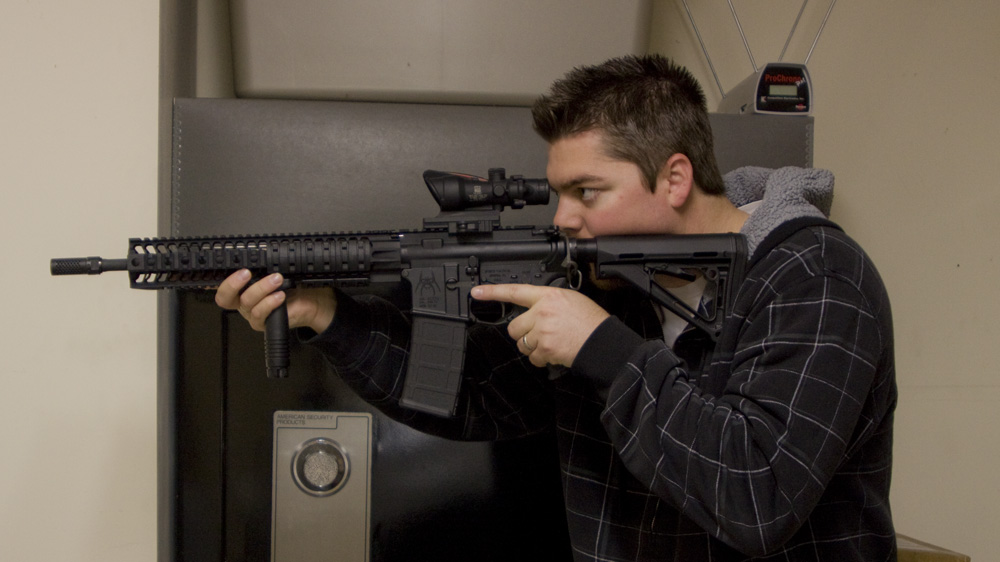
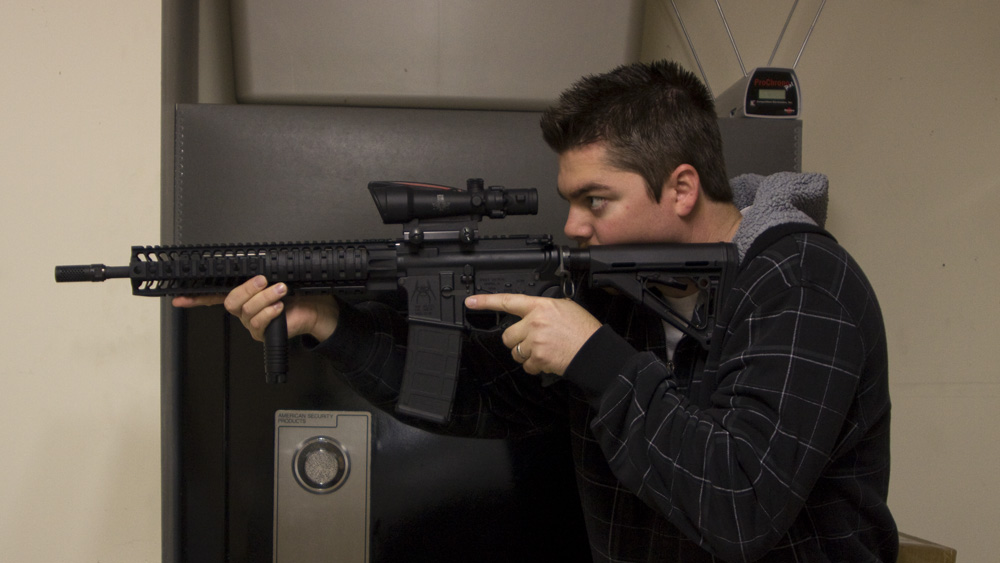
The next thing to consider with these scopes are the specs. One of the biggest factors in choosing the correct ACOG is going to be whether you require long eye relief or if you dont mind a nose-to-charging handle head position. Eye relief affects a number of other factors as well: Peripheral vision, typically field of view, head position forgiveness, general comfort, etc. The most popular ACOG is the TA31 largely due to it being the military issued ACOG. I am not aware of many other instances where a different model ACOG is issued.....MAYBE for machine gunners, but I believe MG'ers are issued Elcan optics. Anyway, it is the TA31 that has the short eye relief: 1.5" to be exact. In testing this, I found the practical distance is somewhere between 1.5"-1.75" MAX. Going back any further cuts your field of view down and darkens the edges of the sight picture dramatically with small changes in distance away from the ocular lens when past the ideal distance. Below is a picture of the ideal head position for the TA31: It requires a nose-to-charging handle head position....this was the furthest back I could go before losing field of view and exhibiting darkened edges.
The TA11 has more generous eye relief. The exit pupil is also larger and more forgiving for head positioning. Trijicon claims 2.4" eye relief and I found that to be exactly correct. To me, it felt much more natural and flat out easier to get on target with the TA11. With the scope a little further away from your face, you get a little better peripheral vision and it is easier to get your head/eye in the correct position to acquire your target, but these benefits come with two drawbacks: Scope weight and field of view. More on FOV later.
The TA33 has by FAR the most generous eye relief, which has one major advantage: Speed. For me, the TA33 is a fast, heads-up and target acquired kind of scope. Trijicon claims a meager 1.9" eye relief for this model, but I find that laughable. The practical max eye relief is actually about 4"! One of the cool things about this scope is that you can also get much close to the ocular lens (front glass eye piece) without having any negative effects on the sight picture....it will only give you a bigger black border around the sight picture. This, of course, gives you no benefit as the closer the scope is to your face, the less peripheral vision you have to your surroundings, but the flexibility of mounting it further forward or back closer towards your face is there without any detrimental sight picture effects.

Continued on next post....
I sometimes see questions on which ACOG to get. Being that I have access to the 3 most popular models, I figured I'd do a write-up and comparison with pics to help those who are trying to figure out which one to get, or which one will serve their purpose best. Who knows: Maybe this can become a sticky so that people will be able to find it in the future. Anyway, here goes the review.
Here are the three models up for review and consideration: TA33 (3x), TA11 (3.5x) and TA31 (4x). Each, I believe, has a special niche which helps them excel in certain shooting conditions. All exhibit extremely clear, bright and crisp glass....some of the best there is. They are all extremely rugged and can take a beating.
Weight
Depending on what kind of rifle you plan to put one of these scopes on, you will probably want to consider the weight of each scope. The TA11 came in at the heaviest and by far the largest/longest of the 3 at 17.93 oz. 2nd place in weight goes to the TA31, weighing 13.83 oz. The lightest of the 3 goes to the TA33, weight a scant 11.74 oz. All three weights were measured WITH the TA60 mount EXCEPT the TA31 which has an American Defense RECON single throw levered quick detach mount. It seems to be lighter than the TA60, so that helped the over all weight a little bit.....but not much.
Eye Relief
The next thing to consider with these scopes are the specs. One of the biggest factors in choosing the correct ACOG is going to be whether you require long eye relief or if you dont mind a nose-to-charging handle head position. Eye relief affects a number of other factors as well: Peripheral vision, typically field of view, head position forgiveness, general comfort, etc. The most popular ACOG is the TA31 largely due to it being the military issued ACOG. I am not aware of many other instances where a different model ACOG is issued.....MAYBE for machine gunners, but I believe MG'ers are issued Elcan optics. Anyway, it is the TA31 that has the short eye relief: 1.5" to be exact. In testing this, I found the practical distance is somewhere between 1.5"-1.75" MAX. Going back any further cuts your field of view down and darkens the edges of the sight picture dramatically with small changes in distance away from the ocular lens when past the ideal distance. Below is a picture of the ideal head position for the TA31: It requires a nose-to-charging handle head position....this was the furthest back I could go before losing field of view and exhibiting darkened edges.
The TA11 has more generous eye relief. The exit pupil is also larger and more forgiving for head positioning. Trijicon claims 2.4" eye relief and I found that to be exactly correct. To me, it felt much more natural and flat out easier to get on target with the TA11. With the scope a little further away from your face, you get a little better peripheral vision and it is easier to get your head/eye in the correct position to acquire your target, but these benefits come with two drawbacks: Scope weight and field of view. More on FOV later.
The TA33 has by FAR the most generous eye relief, which has one major advantage: Speed. For me, the TA33 is a fast, heads-up and target acquired kind of scope. Trijicon claims a meager 1.9" eye relief for this model, but I find that laughable. The practical max eye relief is actually about 4"! One of the cool things about this scope is that you can also get much close to the ocular lens (front glass eye piece) without having any negative effects on the sight picture....it will only give you a bigger black border around the sight picture. This, of course, gives you no benefit as the closer the scope is to your face, the less peripheral vision you have to your surroundings, but the flexibility of mounting it further forward or back closer towards your face is there without any detrimental sight picture effects.
Continued on next post....


 I'm already broke from buying two of the three scopes in this review. Now if you wanna send some scopes my way, I'd be happy to oblige....


Comment