

 Tweet
Tweet
I've created this post to help increase awareness of another fine product. These are made in the USA and also include a lifetime warranty, as do many other name brand safes. Their lifetime warranty against theft and fire is transferable and isn't with these brands. Shipping to the manufacture is free, but an extended warranty is required at this time to get the free shipping. it will be changed this summer to be included in their purchases.
Most, if not all of the safes made in the USA are going to have a one piece steel body and steel door, which will vary in gauge thickness. The other differences that set them apart are fire lining; more specifically what fire lining is used, where it's used and how they are placed.
There are other differences that set safes apart, but all safe companies can add those other features on or are sometimes included in different models, so i'll keep it somewhat simple and stick with fire lining.
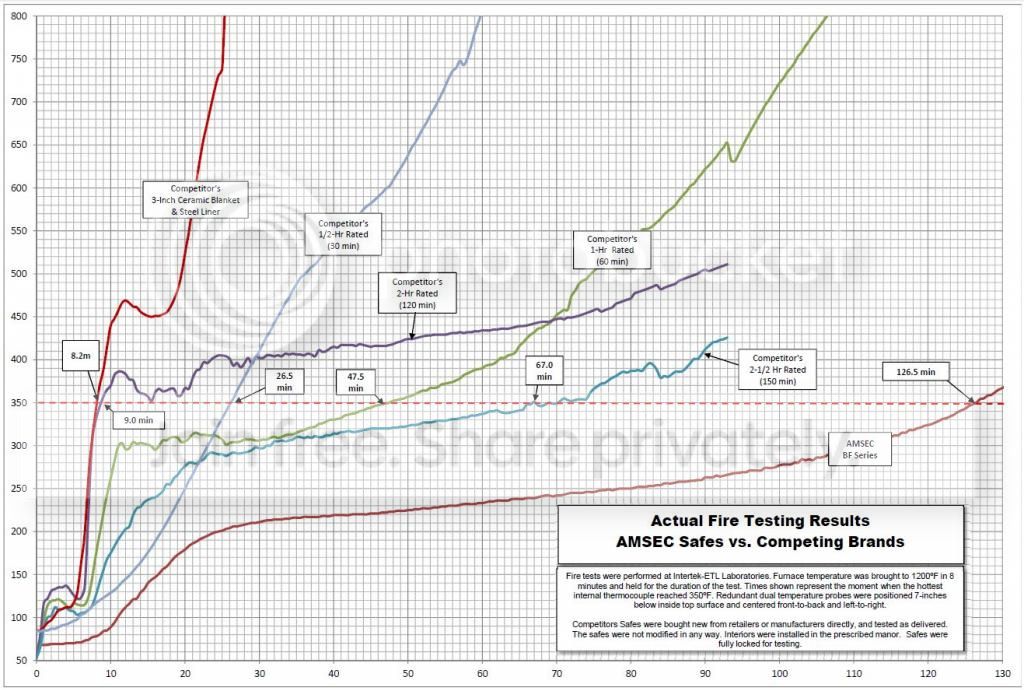
There are many debates on fire lining. i will talk about 3 brands: sun welding, sturdy and the best, amsec. AMSEC has been rated as producing the best safes on the market for commercial and residential use.
Sun Welding uses gypsum fire lining
Sturdy uses ceramic wool and glass blanket material
AMSEC (rated as the best) uses DryLight on their high end models and gypsum on the more cost effective models. see website for more info: www.amsecusa.com
Marketing does a lot for differentiation when wanting to sell a safe, such as new fire lining options, steel plates mounted behind locks, quantity of door pins, etc.
So why does Sturdy use ceramic wool and glass blanket material and not anything else? Based on their own independent testing, they've had success with it. Unfortunately, they do admit on their website that it wasn't tested by UL standards and it doesn't have a UL certification. They also state that many independent tests can mislead people into thinking their fire ratings are better.
According to Sun Welding Safes, they do not use ceramic wool because no other 3rd party tests have tested it in the safe and the industry standard is the fire code drywall. If there was testing that proved it was a better material in the safes then they would consider it. However, it does require it to put a inner steel liner inside the safe takes more time. Plus its a more expensive option.
AMSEC uses DryLight concrete insulation which eliminates the use of gypsum board and forms a solid theft barrier from outside attacks as well as superior fire protection. From what I understand, this keeps the inside heat low and consistent. They also use gypsum on the less expensive lines.
Gypsum is used as the industry standard when lining a safe for fire protection.
Lastly, if you have a raging inferno with extreme temps, no safe will hold up. That being said, here are a few questions to pose to oneself:
where will the safe be placed? if it's in a garage, make sure you have some sort of neoprene barrier so that moisture isn't pulled towards the metal increasing the tendency to rust over time. If you have dissimilar metals making contact in the safe, such as aluminum and metal, usually used to reinforce the safe, this will cause galvanic action.
what will be placed inside it? if they are very valuable, make sure you get the best safe or place those belongings in a bank vault.
What size do you really need? Always go bigger. theres no use when you out grow a safe and have to buy another larger one. Also, measure and make sure it'll fit.
What's your budget? this will dictate where you fall along these safe manufacturers or others.
Lastly, all the above mentioned safes are great. Prices will vary by 2K and up over the sun welding safes.
if you're interested in a group buy, please let me know. if you have other details i may have missed or others you can add, please do so.
Most, if not all of the safes made in the USA are going to have a one piece steel body and steel door, which will vary in gauge thickness. The other differences that set them apart are fire lining; more specifically what fire lining is used, where it's used and how they are placed.
There are other differences that set safes apart, but all safe companies can add those other features on or are sometimes included in different models, so i'll keep it somewhat simple and stick with fire lining.
There are many debates on fire lining. i will talk about 3 brands: sun welding, sturdy and the best, amsec. AMSEC has been rated as producing the best safes on the market for commercial and residential use.
Sun Welding uses gypsum fire lining
Sturdy uses ceramic wool and glass blanket material
AMSEC (rated as the best) uses DryLight on their high end models and gypsum on the more cost effective models. see website for more info: www.amsecusa.com
Marketing does a lot for differentiation when wanting to sell a safe, such as new fire lining options, steel plates mounted behind locks, quantity of door pins, etc.
So why does Sturdy use ceramic wool and glass blanket material and not anything else? Based on their own independent testing, they've had success with it. Unfortunately, they do admit on their website that it wasn't tested by UL standards and it doesn't have a UL certification. They also state that many independent tests can mislead people into thinking their fire ratings are better.
According to Sun Welding Safes, they do not use ceramic wool because no other 3rd party tests have tested it in the safe and the industry standard is the fire code drywall. If there was testing that proved it was a better material in the safes then they would consider it. However, it does require it to put a inner steel liner inside the safe takes more time. Plus its a more expensive option.
AMSEC uses DryLight concrete insulation which eliminates the use of gypsum board and forms a solid theft barrier from outside attacks as well as superior fire protection. From what I understand, this keeps the inside heat low and consistent. They also use gypsum on the less expensive lines.
Gypsum is used as the industry standard when lining a safe for fire protection.
Lastly, if you have a raging inferno with extreme temps, no safe will hold up. That being said, here are a few questions to pose to oneself:
where will the safe be placed? if it's in a garage, make sure you have some sort of neoprene barrier so that moisture isn't pulled towards the metal increasing the tendency to rust over time. If you have dissimilar metals making contact in the safe, such as aluminum and metal, usually used to reinforce the safe, this will cause galvanic action.
what will be placed inside it? if they are very valuable, make sure you get the best safe or place those belongings in a bank vault.
What size do you really need? Always go bigger. theres no use when you out grow a safe and have to buy another larger one. Also, measure and make sure it'll fit.
What's your budget? this will dictate where you fall along these safe manufacturers or others.
Lastly, all the above mentioned safes are great. Prices will vary by 2K and up over the sun welding safes.
if you're interested in a group buy, please let me know. if you have other details i may have missed or others you can add, please do so.




Comment