

 Tweet
I see a lot of Glock users like to put in a 3.5 lb connector and a 6lb trigger spring. What difference do they make?
-
Protect public lands access http://www.backcountryhunters.org/ -
-
-
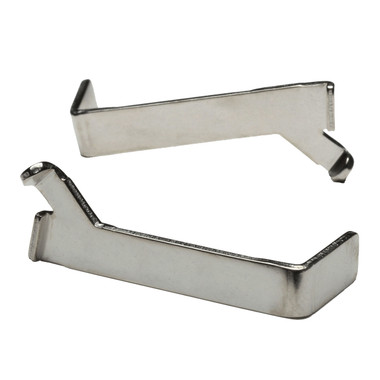
The 3.5# connector has a steeper angle, making the trigger break earlier, hence, the perception that it is "lighter."
The trigger spring adds rearward pressure to the trigger itself thus reducing how much pressure your finger needs to apply.
Ultimately, what lightens the weight are a combination of stuff. For me, I think the biggest factor is a LIGHTER firing pin spring (striker) and a lighter firing pin.
It is perceptible, it is just not significant.
_Comment
-
it's not as simple an interaction as perhaps one experiences in a 1911 trigger...at least for me.
what i've gleamed from reading a bit about this and from evaluating several glock pistols is that the trigger bar pushes against the connector.....the various available connectors generally have altered slopes so that this resulting interaction/feel can be made harder or less hard, shorter or longer. Sharper the slope the harder the pull. The longer and more gradual the stroke angle, the easier and yet more rolling feel to the break.
Then you have the interaction of the striker spring and the trigger spring (which resets the trigger) and they somewhat oppose each other...so you generally balance one against the other to modify pull weight while maintaining reliable primer hitsComment
-

It's a combination of factors/parts that need to be balanced out to achieve a light pull without compromising the three safeties. ... Even reducing the safety plunger spring will reduce the pull weight.
BTW, the 3.5 in the "3.5lb connector" is a misnomer. It doesn't reduce the pull weight to 3.5... The correct term right now is called the "minus connector."
_Comment
-
Ok so the minus connector changes geometry a little, that seems feasible and shouldn't affect reliability or safety. I think I will stick with everything else stock, I just don't see how reducing the pull weight can maintain the safety level or reliability. Actually, with my two recent Glock purchases, I was surprised to see how nice the stock triggers were compared to Glocks I handled decades ago, much improved. Thanks for the info.Protect public lands access http://www.backcountryhunters.org/Comment
-
Yes, changing springs and the firing pin will impact reliability.
Personally after many attempts - if I had only one thing to change, it would be changing the connector to the Taran Tactical Innovations one. It doesn't change the pull weight, maintains all safeties, but makes the pull sharper.
I just don't have trust on other connectors out there - ZEV, Ghost, etc.
My carry outside CA is a G26. All stock except for the TTI connector.
Sent from my Pixel 3 using TapatalkLast edited by rodralig; 11-05-2019, 10:43 AM.Comment
-
The 3.5 or "minus" connectors shine if you're really awesome in your trigger control.
For most shooters, the stock 5.5 connector is good to go.
To smooth the GLOCK trigger, do the "25 Cent Trigger Job".Comment
-
-
I have no issues with the minus connector. It was designed to work with Glocks, made by Glock - very reliable and a nice/quick feel to the break (compared to the 'normal' one). I think that some pistols already come with the "minus" connector instead of the 5.5# connector (forgot if it was the G34/G35 if it is sold to civilians rather to law enforcement).
When I compete in Glock-only matches (like the upcoming one on 16/17-Nov) where the majority of the divisions require "stock" Glocks, I don't have a problem...
I just find that the TTI connector has a sharper feel,
_Comment
-
I get the spring.... but please explain how a light weight Striker can in ANY way lower trigger pull weight?
Trigger jobs are where I started my Gunsmithing path...20+ years ago. And it all started with my first pistol, a 2nd Gen Glock17. Have had a few since and each one had trigger work . With all the different configs. I went through, my favorite now is the stock 5.5lb connector and heavier trigger spring. And of course making all parts polished or “Chiny, meng!”, as an Illegal Alien would say.Comment
-
the only thing I know about lighter striker springs is they sure caused a lot of FTF in my G33 and bad trigger reset. My other comment is destroying Glocks can be an expensive hobby. I don't think I will ever change a striker spring again it was that bad. I am willing to try a TTI or Glock minus connector that seems safe and useful, I am still unconvinced messing with the safety plunger or trigger spring is wise. That being said, I am not wise to how the trigger return spring affects the whole assembly, if it doesn't affect safety but helps with crisper shorter reset, I would consider it.Last edited by Hunt; 11-05-2019, 2:53 PM.Protect public lands access http://www.backcountryhunters.org/Comment
-
Johnny Glock does some interesting educational vids on Youtube on the interaction of the glock trigger parts.
He explains what you can do and shouldn't do...critical to maintain the safety features on a Glock.
― Edwin Louis Cole
------------------------
"Everyone has a plan until they get punched in the face", Mike TysonComment
-
I agree with you on the striker spring. I use stock weight springs made by Shadow Systems only. No light spring or striker!
As for the trigger (return) spring. I use the Zev spring. This one. https://www.midwayusa.com/product/100409887?pid=611080Comment




There are currently 17231 users online. 57 members and 17174 guests.
Most users ever online was 239,041 at 11:39 PM on 02-14-2026.


Comment